How to Build a D2C Brand on a Bootstrap Budget
Start a D2C brand with a narrow product offer, realistic unit economics, lean creative production, and small tests before committing more budget.
On this page
- Introduction
- What "Bootstrap Budget" Actually Means for D2C
- Step 1: Choose the Right Product and Business Model
- Step 2: Build Your Store for Under $500
- Step 3: Acquire Your First 1,000 Customers Without Burning Cash
- Step 4: Scale from $0 to $50K Monthly Revenue
- Free and Low-Cost Tools Every Bootstrap D2C Brand Needs
- The Bootstrap Mindset: What Matters Most
- Frequently Asked Questions
You can launch a D2C brand without a large funding round. Many brands reach meaningful revenue from modest starting capital. The constraint is real, but it can force clearer choices about product margin, inventory, and acquisition.
This guide gives a budget framework for selecting a product, building a basic store, finding the first 1,000 customers, and reinvesting toward $50,000 in monthly revenue.
What "Bootstrap Budget" Actually Means for D2C
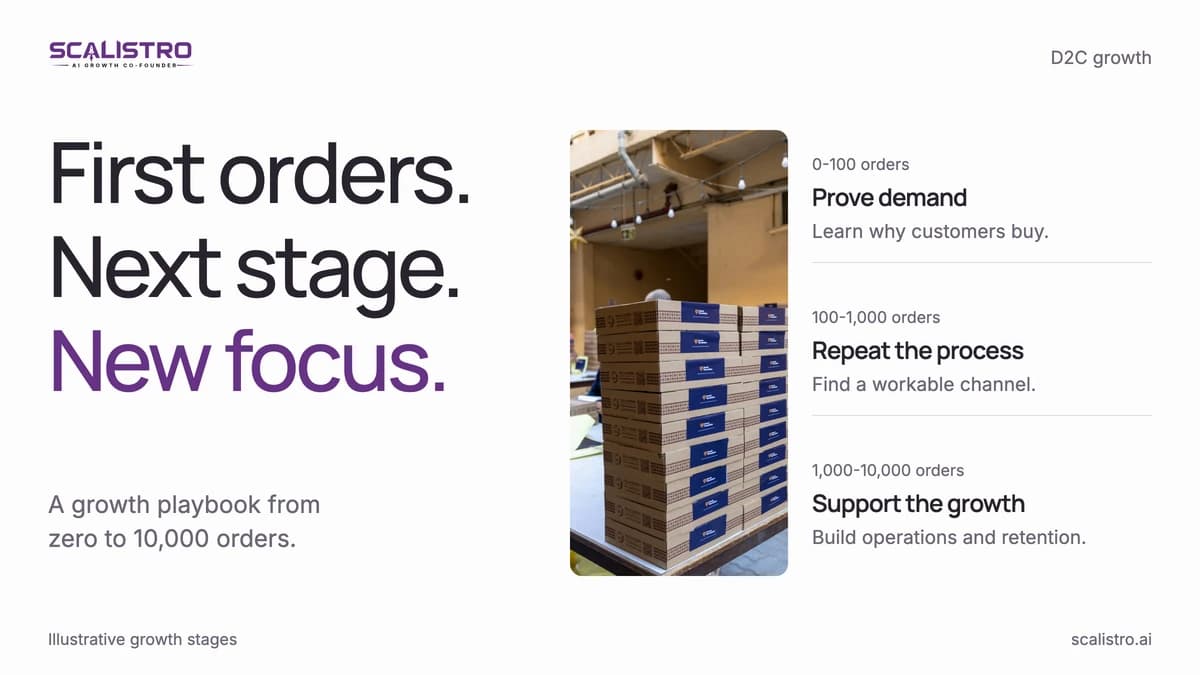
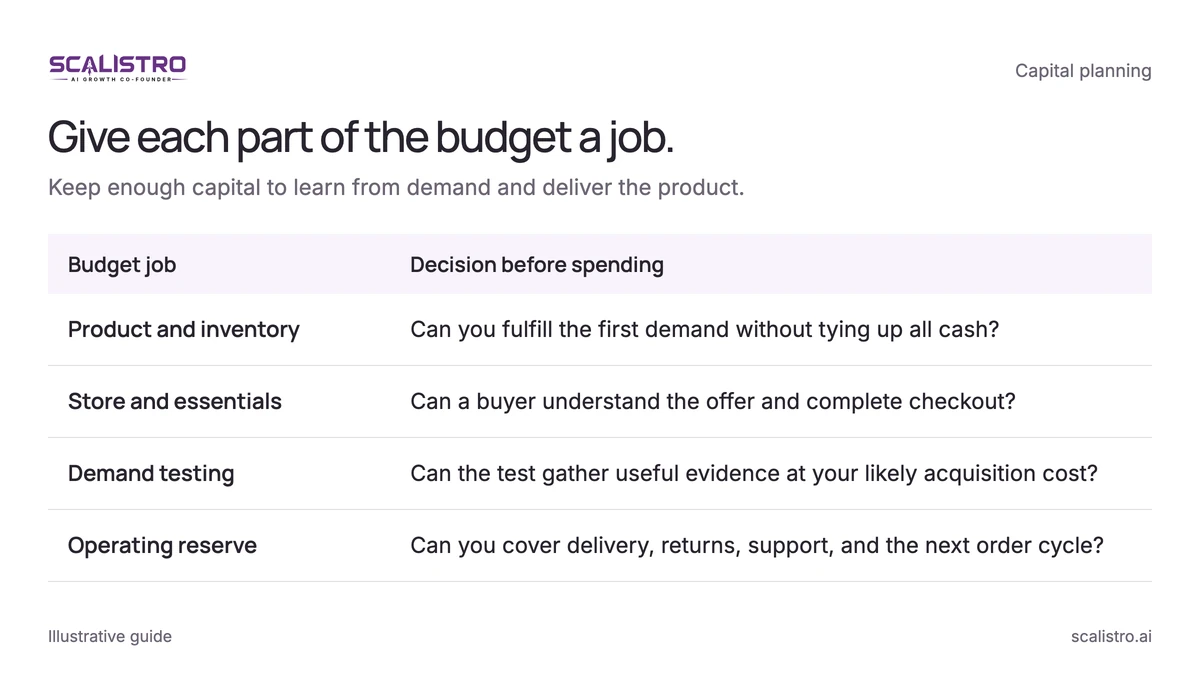
Start by deciding how much capital can go into product and how much must remain available for testing demand. These ranges show how that balance can change with starting capital:
Swipe to explore. Tap to open full size.
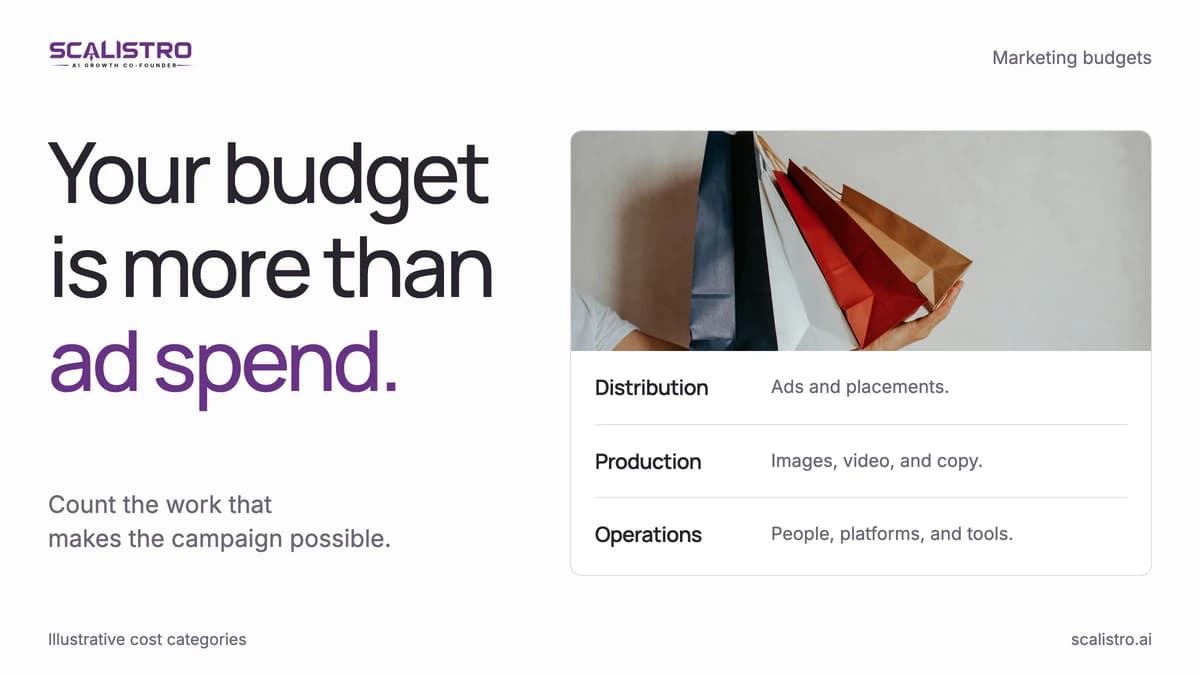
Image details: Give each part of the budget a job.
| Budget job | Decision before spending |
|---|---|
| Product and inventory | Can you fulfill the first demand without tying up all cash? |
| Store and essentials | Can a buyer understand the offer and complete checkout? |
| Demand testing | Can the test gather useful evidence at your likely acquisition cost? |
| Operating reserve | Can you cover delivery, returns, support, and the next order cycle? |
| Starting Capital | Product Budget | Marketing Budget | Revenue Target (Year 1) | Timeline to Profitability |
|---|---|---|---|---|
| $5,000-$10,000 | $3,000-$6,000 | $1,000-$3,000 | $50K-$150K | 3-6 months |
| $10,000-$25,000 | $6,000-$15,000 | $3,000-$8,000 | $100K-$350K | 2-5 months |
| $25,000-$50,000 | $12,000-$25,000 | $8,000-$20,000 | $200K-$750K | 1-4 months |
Treat year-one revenue in the table as a planning target. Product-market fit and organic growth rate will matter more than starting capital alone, so revise the plan as soon as real orders reveal the economics.
Step 1: Choose the Right Product and Business Model
Choose a product whose price, repeat demand, and shipping costs leave room to acquire customers. Marketing efficiency cannot compensate for a product that loses money on each order.
Product Selection Criteria for Bootstrap Founders
Evaluate these criteria together. A great margin is less useful if the minimum order quantity consumes the cash needed to reach buyers.
- Gross margins above 65%: You need high margins to fund growth from revenue. Products with 65-80% gross margins (skincare, supplements, digital-physical hybrids, premium accessories) give you $0.65 to $0.80 of every dollar to reinvest. Products with 40% margins leave only $0.40 - making paid acquisition nearly impossible without external capital.
- Average order value $40-$120: Below $40 AOV, customer acquisition costs can take most of the margin on each order. Above $120, the consideration period lengthens and conversion rates drop, requiring more touchpoints (which costs money). The $40-$120 sweet spot balances margin, conversion speed, and acquisition cost.
- Replenishable or expandable: Products that need refilling (skincare, supplements, food, cleaning products) or that invite collection (fashion, accessories, home decor) tend to earn more over a customer's lifetime than one-time purchase items. Repeat purchases are the engine of bootstrapped growth - each returning customer was acquired for free.
- Low minimum order quantities: Negotiate MOQs of 100 to 500 units rather than 5,000 to 10,000. Many contract manufacturers offer lower MOQs for first orders at slightly higher per-unit costs. This preserves cash for marketing and lets you validate demand before committing to large production runs.
- Lightweight and easy to ship: Shipping costs for heavy or fragile products erode margins quickly. Lighter parcels usually cost noticeably less to ship, so check carrier rates for your product's weight and size before you commit. A few dollars per order compounds into thousands of dollars in margin over your first 1,000 orders.
Business Model Options for Bootstrap Brands
Compare speed to launch with margin and inventory risk before choosing a model. The cheapest model is not always the best path to a differentiated product.
| Model | Startup Cost | Margin Potential | Risk Level | Best For |
|---|---|---|---|---|
| Private Label | $3K-$15K | 60-75% | Medium | Beauty, supplements, home goods |
| White Label + Branding | $1K-$5K | 50-65% | Low | Quick launch, market testing |
| Custom Manufacturing | $10K-$50K+ | 70-85% | High | Unique products, strong differentiation |
| Print on Demand | $0-$500 | 30-50% | Very Low | Apparel, accessories, testing designs |
| Dropship + Brand | $500-$3K | 25-45% | Low | Market validation before investing in inventory |
Starting choice: Private or white label can limit upfront cost while preserving usable margins. Consider custom manufacturing after 500 to 1,000 customers have validated the demand and you know what needs to be different.
Step 2: Build Your Store for Under $500
Build a store that explains the product, loads quickly, and completes a purchase on mobile. Hold back spending on a custom design until customer behavior shows what needs improvement.
Essential Tech Stack
Use the smallest set of tools needed to take orders, measure traffic, collect reviews, and follow up with customers. Check current plan prices before committing because software tiers change.
- Shopify Basic: Shopify's entry plan (current pricing). Includes hosting, SSL, checkout and payment processing, and a mobile-optimized storefront.
- Free Shopify theme: Dawn (Shopify's default) or Taste are professional, fast-loading free themes. Do not spend $250 to $350 on a premium theme at launch - a well-configured free theme is enough to start selling. You can upgrade later.
- Email marketing: Klaviyo is free up to 250 profiles and 500 email sends per month (Klaviyo). Mailchimp is free up to 500 contacts. Start free and upgrade only when your list exceeds the free tier. In Litmus's survey, most marketers reported $10 to $50 back for every $1 spent on email (Litmus).
- Analytics: Google Analytics 4 (free). Meta Pixel (free). These two tools provide all the analytics you need for your first $500K in revenue.
- Reviews: Judge.me offers a free plan with basic review collection. Spiegel Research Center found a product with five reviews was 270 percent more likely to be purchased than one with none (Spiegel, 2017), so collect reviews even on a bootstrap budget.
- Social media management: Buffer offers a free plan for 3 channels. Later offers a free plan for 1 social profile. This is sufficient for the first 3 to 6 months.
DIY Brand Identity
A simple identity needs clear type, colors, and product images that shoppers can recognize. Keep the rules short enough to apply consistently:
- Logo: Use Canva's logo maker (free) or Looka ($20 one-time). Your logo needs to be clean and legible - it does not need to be a masterpiece. Many $10M+ D2C brands launched with simple text logos.
- Brand colors and typography: Choose 2 to 3 colors and 2 fonts that reflect your brand personality. Tools like Coolors.co (free) generate cohesive color palettes. Google Fonts provides thousands of free, professional typefaces.
- Product photography: A smartphone with good natural lighting can produce product photos good enough to launch with. Set up a $30 lightbox or use a white foam board as a backdrop. Shoot near a large window during golden hour. Edit with Snapseed (free) or Lightroom Mobile (free tier).
Step 3: Acquire Your First 1,000 Customers Without Burning Cash
The first 1,000 orders should teach you who buys, what they value, and why they return. Use organic content, search, and community work to learn before committing heavily to paid acquisition.
Organic Social Media (Cost: $0 + Your Time)
Organic social can be a strong first channel when the product is easy to show. The working commitment in this guide is 2 to 4 hours a day for creating content and talking with customers; choose one platform so that time produces a useful learning loop.
- Platform focus: Choose ONE platform to master before expanding. TikTok can offer large organic reach, though a single video's results are unpredictable. Instagram is better for brands with strong visual appeal and products over $50 AOV. Pinterest is worth testing for home, beauty, and fashion brands, where people often browse with purchase intent.
- Content strategy: Follow the 80/20 rule - 80% value-driven content (education, entertainment, behind-the-scenes) and 20% promotional content. The number one mistake bootstrapped founders make is posting too much product content. Audiences follow brands for value, not ads.
- Posting cadence: TikTok: 1 to 3 videos per day. Instagram: 1 post + 3 to 5 Stories per day. Pinterest: 5 to 15 pins per day (using batch creation). Consistency matters more than perfection.
- Community engagement: Spend 30 to 60 minutes daily commenting on posts from accounts in your niche, responding to comments on your content, and engaging in relevant conversations. This "manual outreach" approach builds genuine connections and drives 200 to 500 profile visits per day for actively engaged accounts.
Content Marketing and SEO (Cost: $0-$50/month)
Search-led articles and videos can keep answering buyer questions after publication. Start with topics tied to the product and measure qualified traffic, not only rankings.
- Start a blog: Publish 2 to 4 SEO-optimized articles per month targeting long-tail keywords in your product category. Use free tools like Ubersuggest or Google Keyword Planner to find keywords with 500 to 5,000 monthly searches and low competition. Each article targets one primary keyword and 3 to 5 related keywords.
- Content types that drive D2C traffic: "Best [product category] for [use case]" comparison articles, how-to guides related to your product, ingredient or material deep-dives, and "X vs Y" comparison posts. These content types capture mid-funnel search intent - people actively researching before buying.
- SEO timeline: Expect to see organic traffic results in 3 to 6 months. By month 6, a consistent content program drives 2,000 to 10,000 monthly organic visitors. By month 12, 5,000 to 30,000. The compounding nature of SEO makes it the most cost-effective long-term growth channel for bootstrapped brands.
Community and Word-of-Mouth (Cost: $0-$200/month)
Build trust before asking for attention. Community answers, small creator partnerships, and referrals work best when people have a real reason to recommend the product.
- Reddit and niche forums: Identify 3 to 5 subreddits or online communities where your target customers congregate. Contribute genuinely (answer questions, share expertise) for 2 to 4 weeks before mentioning your product. When you do, be transparent: "I built this because I had the same problem." Traffic from a genuine community presence tends to arrive with real interest.
- Micro-influencer product seeding: Send free products to 20 to 30 nano-influencers (1,000-5,000 followers) in your niche. At $10 to $20 product cost each, this is a $200 to $600 investment. Not every creator will post, so track who does and which content you can reuse. Seeding usually costs far less than paid partnerships.
- Referral program: Launch a simple referral program offering a $10 to $15 credit for both referrer and friend. Tools like ReferralCandy ($49/month) or Friendbuy automate tracking and rewards. Track referral orders separately so you can see whether the program pays for its credits.
Step 4: Scale from $0 to $50K Monthly Revenue
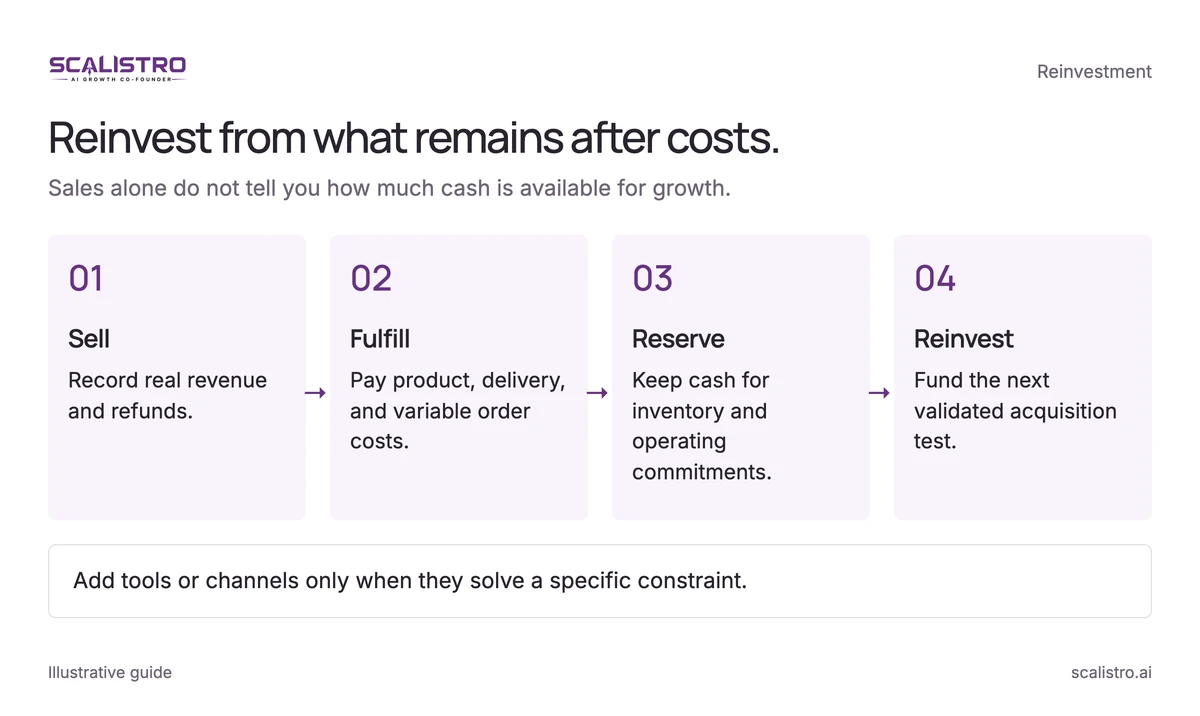
Reinvest from gross profit, not top-line revenue. Keep inventory, delivery, and support funded while increasing acquisition spend.
Swipe to explore. Tap to open full size.
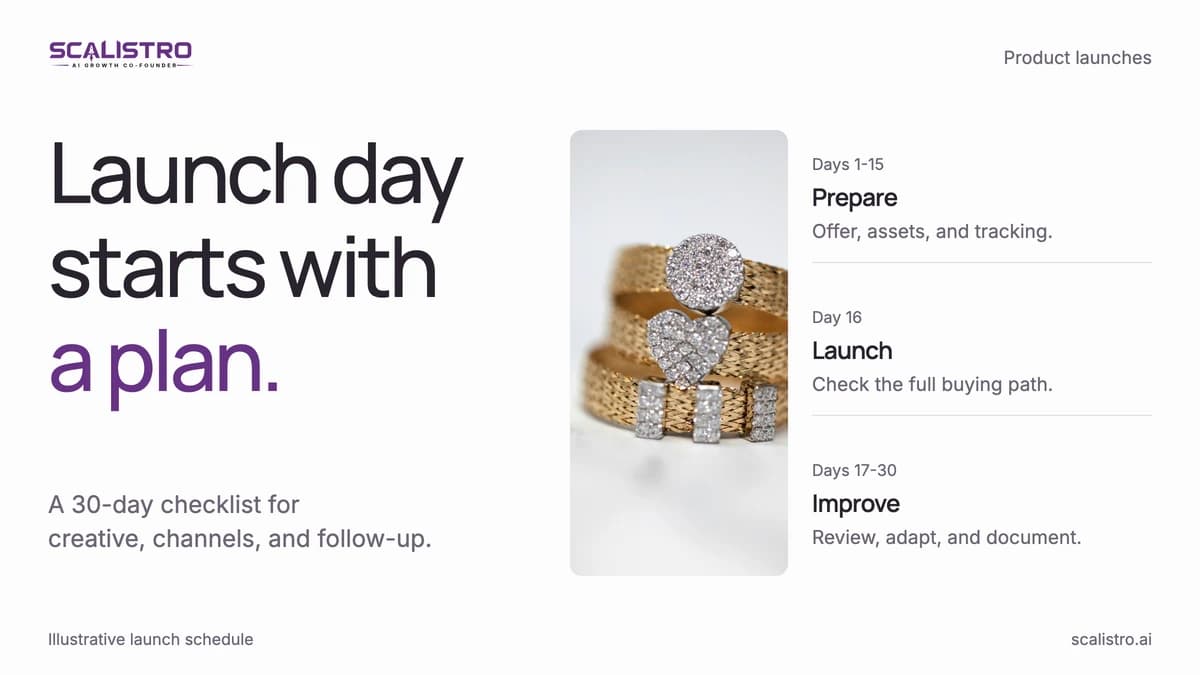
Image details: Reinvest from what remains after costs.
Reinvest from what remains after costs. Sales alone do not tell you how much cash is available for growth. Sell - Record real revenue and refunds.; Fulfill - Pay product, delivery, and variable order costs.; Reserve - Keep cash for inventory and operating commitments.; Reinvest - Fund the next validated acquisition test. Add tools or channels only when they solve a specific constraint.
Reinvestment Framework
Start with 30 to 40% of gross profit for acquisition and marketing, then adjust the share as repeat orders and contribution margin become clearer.
| Monthly Revenue | Marketing Reinvestment (35% of Gross Profit) | Focus Channels |
|---|---|---|
| $0-$5K | $0-$1,100 | Organic social, SEO, product seeding, community |
| $5K-$15K | $1,100-$3,400 | Add small Meta ad spend ($500-$1,500), email automation |
| $15K-$30K | $3,400-$6,800 | Scale Meta ads, add Google Shopping, micro-influencer budget |
| $30K-$50K | $6,800-$11,400 | Full-channel marketing, consider Scalistro for AI creative + expert support |
When to Start Paid Advertising
Paid ads amplify the product and store you already have. Check these three conditions before funding a sustained campaign:
- Product-market fit validated: At least 100 organic sales with a 4+ star average review rating and a repeat purchase rate above 15%. Paid ads amplify what works - if your product does not retain customers organically, ads will accelerate your cash burn, not your growth.
- Conversion rate above 1.5%: Below 1.5% site conversion rate, the math does not work for paid ads. With a $30 CPA and 1% conversion rate, you are paying $3,000 per 100 conversions. At 2% conversion rate, you are paying $1,500 for the same 100 conversions. Fix your site first.
- At least $1,000/month to dedicate: Below $1,000/month, most ad sets will not get enough conversions for Meta's delivery system to finish its learning phase. It is better to save up and launch with $1,500 to $3,000 than to trickle out $200/week.
The First Paid Ad Campaign ($1,500/month Budget)
At a $1,500 monthly media budget, give each part of the campaign a job and measure new customers separately from warm-audience orders:
- Campaign 1 - Retargeting ($500/month): Target website visitors (last 30 days) and email subscribers with product-focused ads. Use your best-performing organic content as ad creative. Retargeting usually reports the highest ROAS of the three because these people already know your brand, though some of those sales would have happened anyway.
- Campaign 2 - Lookalike Prospecting ($700/month): Create 1% lookalike audiences based on your customers and email list. Test 3 to 5 ad creatives (mix of UGC, lifestyle, and product-focused). Judge it on new-customer cost and payback, not only reported ROAS.
- Campaign 3 - Testing ($300/month): Test new audiences, new creative angles, and new ad formats. This is your learning budget - expect lower ROAS, but the insights inform scaling decisions.
Free and Low-Cost Tools Every Bootstrap D2C Brand Needs
Free plans are useful until a specific limit slows the team down. Upgrade for a clear capability or volume need, not because the brand has reached an arbitrary age.
| Category | Free Tool | Paid Upgrade (When Ready) | Upgrade Trigger |
|---|---|---|---|
| Design | Canva Free | Canva Pro ($13/mo) | Need brand kit, background remover |
| Klaviyo Free (250 contacts) | Klaviyo Paid ($20+/mo) | List exceeds 250 contacts | |
| Analytics | Google Analytics 4 | Triple Whale ($100+/mo) | $20K+/mo revenue, need attribution |
| SEO | Ubersuggest Free (3 searches/day) | Ahrefs Lite ($99/mo) | Publishing 4+ articles/month |
| Social | Buffer Free (3 channels) | Buffer Essentials ($6/mo/channel) | Managing 4+ channels |
| Reviews | Judge.me Free | Judge.me Awesome ($15/mo) | Need photo reviews, carousel widget |
| Video Editing | CapCut (free) | CapCut Pro ($8/mo) | Need longer exports, more effects |
The Bootstrap Mindset: What Matters Most
Use these principles when a new tool, campaign, or vendor asks for money that could fund product learning instead:
- Speed over perfection: Launch with a "good enough" product and brand, then iterate based on customer feedback. The brand that launches in 30 days and iterates 10 times will outperform the brand that spends 6 months perfecting before launching. Every day without customers is a day without learning.
- Retention over acquisition: Acquiring a new customer is anywhere from 5 to 25 times more expensive than retaining an existing one, depending on the study and industry (Harvard Business Review, 2014). For bootstrapped brands, this multiplier is even higher because you lack the capital for sustained acquisition spending. Focus obsessively on product quality, customer experience, and repeat purchases. Research by Frederick Reichheld of Bain & Company found that increasing customer retention by 5 percent increases profits by 25 to 95 percent (Harvard Business Review, 2014).
- Leverage over brute force: Use AI tools, automation, and platforms that multiply your output. A solo founder using AI-powered creative tools like Scalistro can prepare many more ad variations than one person could design by hand, leaving time to review them and choose the best. Email automation lets you sell while you sleep. SEO content drives traffic while you focus on product development. Every system you build creates leverage that compounds over time.
Once the first product works, use the D2C growth playbook to plan the next stage.