AEO and GEO for D2C Brands: What They Mean for Your Store
What answer engine optimization and generative engine optimization mean for a D2C store, how they relate to SEO, and the practical work behind each one.
On this page
Shoppers now ask questions in more places than a search box. Some read the classic list of links, some read an AI summary at the top of the results, and some ask an AI assistant directly which product to buy. SEO, AEO, and GEO are three names for making your store useful in each of those places. They overlap more than the acronyms suggest.
The Short Version
- SEO (search engine optimization) helps your pages get discovered, indexed, and ranked in organic search results.
- AEO (answer engine optimization) focuses on clearly answering the questions people ask, so your page can serve as the answer.
- GEO (generative engine optimization) considers how generative AI systems find, understand, and cite your content when they write a response.
Swipe to explore. Tap to open full size.
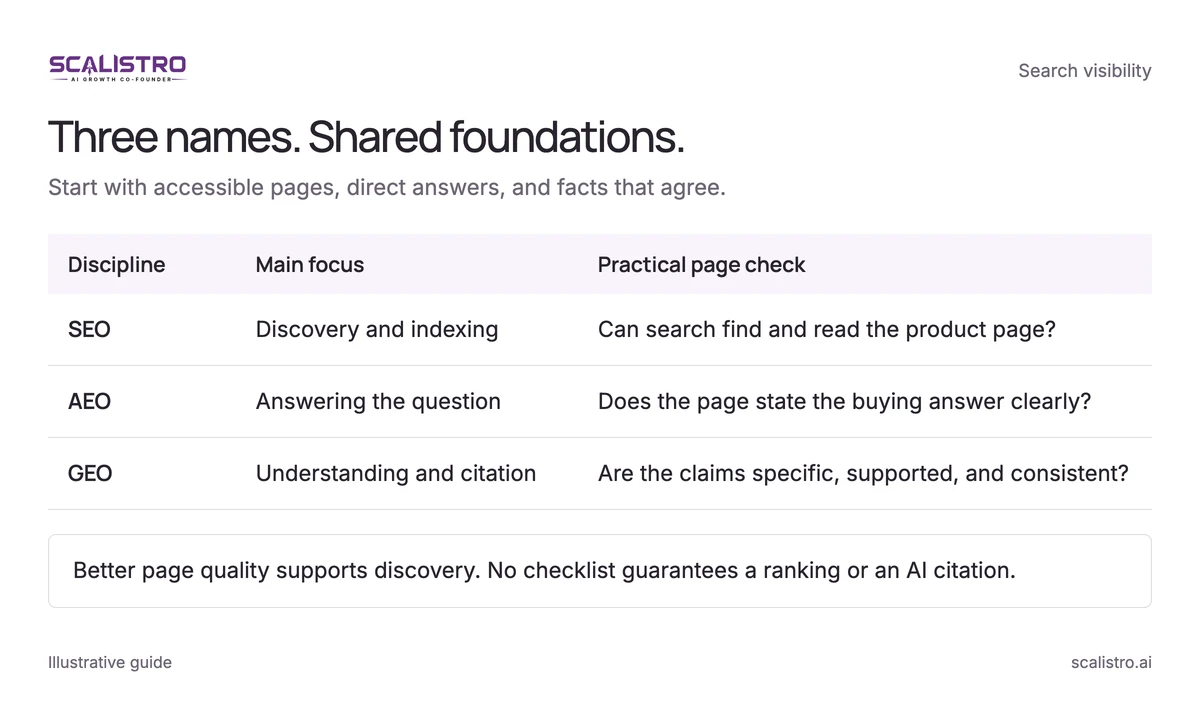
Image details: Three names. Shared foundations.
| Discipline | Main focus | Practical page check |
|---|---|---|
| SEO | Discovery and indexing | Can search find and read the product page? |
| AEO | Answering the question | Does the page state the buying answer clearly? |
| GEO | Understanding and citation | Are the claims specific, supported, and consistent? |
Better page quality supports discovery. No checklist guarantees a ranking or an AI citation.
All three reward the same foundations: pages that can be crawled, answers that are direct and accurate, and information that agrees wherever it appears.
SEO: Be Findable First
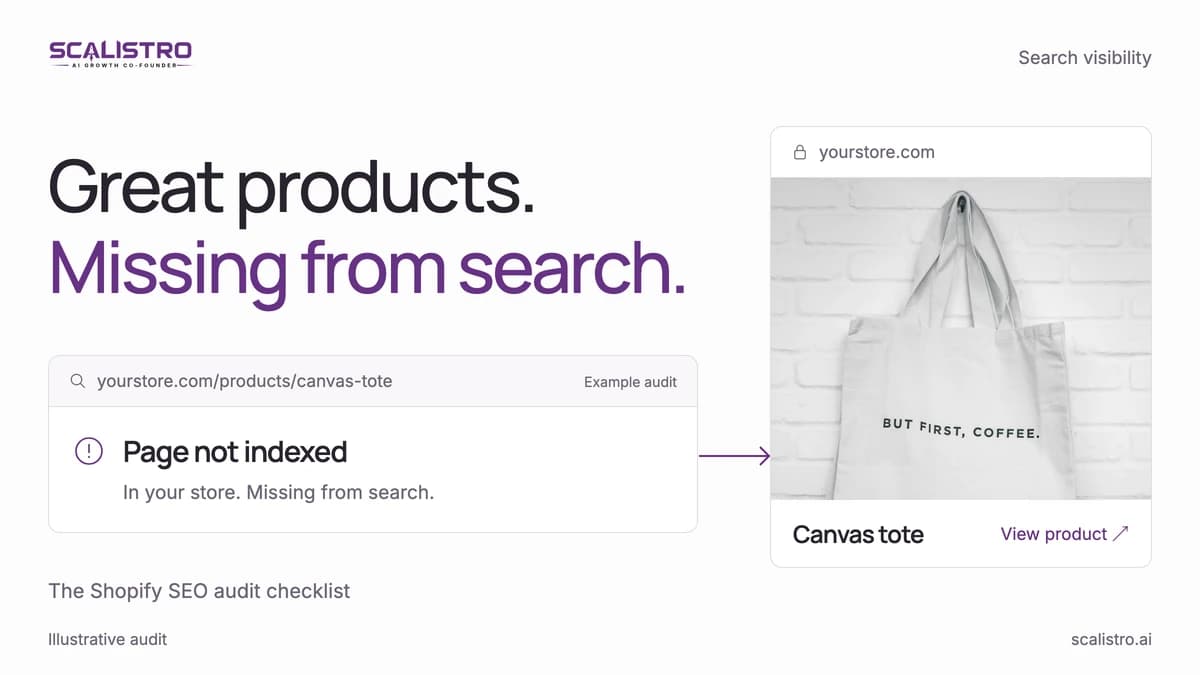
Every AI answer that cites the web starts with pages that can be fetched and understood. If your product pages are blocked, slow to render, or missing from the index, no amount of answer-focused writing will help. For a D2C store, SEO work means:
- Important products and collections are indexed, with one clear URL each.
- Titles and descriptions say what the product is and who it is for.
- Collections link to products with standard, crawlable links.
The Shopify SEO audit checklist walks through these checks step by step.
AEO: Answer the Question Behind the Visit
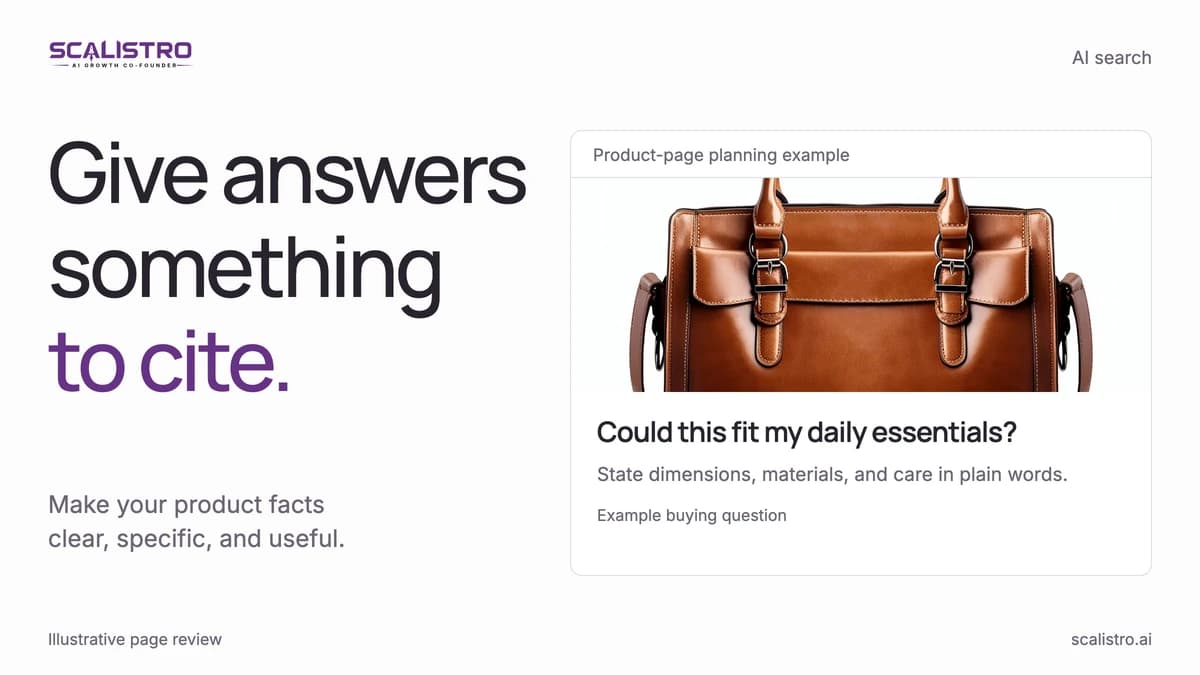
People rarely search for a product name alone. They ask whether it fits, whether it suits their use, how it compares, and what happens if it does not work out. AEO means putting direct answers to those questions on the page.
For example, a snowboard page that says "perfect for everyone" answers nothing. A page that states the recommended rider weight for each length, the riding style the board suits, and where to find a size chart answers the question a shopper actually has.
Practical AEO work on a D2C store:
- Collect the questions customers ask your support team, in reviews, and in social comments.
- Answer each one in plain language on the relevant product page, collection, or guide.
- Lead with the answer, then add the detail. A sentence such as "Choose the 154 cm board if you weigh 60 to 75 kg" is easier to use than a paragraph that builds up to it.
- Keep visible FAQs short and specific to the product, not generic store policies repeated on every page.
GEO: Make Your Information Easy to Trust and Cite
Generative AI systems combine information from several sources into one answer. They are more likely to use your page when the facts are clear, specific, and consistent. GEO is less about tricks and more about removing reasons for doubt.
- Make your facts agree. If a buying guide calls a product soft and the product page calls it medium, an AI system has two conflicting claims to reconcile. Pick the verified specification and use it everywhere.
- Show where claims come from. Materials, certifications, test results, and comparisons are more credible when the page names the source.
- Use specific language. "Holds 750 ml and keeps drinks cold for 24 hours in testing" is easier to quote than "keeps drinks cold all day."
- Be consistent about your brand. Use one name for your brand and each product across your site, marketplaces, and social profiles.
The guide to how product pages get cited in AI answers turns these principles into a page-by-page checklist.
What Does Not Change
Two things stay true across all three:
- No one can guarantee rankings or citations. Search engines and AI services decide what to show, and AI answers can differ from one run to the next. Treat any promise of guaranteed AI placement with caution.
- Helpful pages win over time. Pages that answer real buying questions accurately tend to serve shoppers, search engines, and AI systems at the same time.
Crawler Access Is a Business Decision
Different AI services use different crawlers, and several separate search crawling from training. OpenAI, for example, documents OAI-SearchBot for ChatGPT search and GPTBot for model training. Google-Extended controls whether content is used for Gemini model training, separately from Google Search. Review which crawlers your robots.txt allows before blocking any of them, because blocking a search crawler can remove your pages from that service's answers.
How to Measure Progress
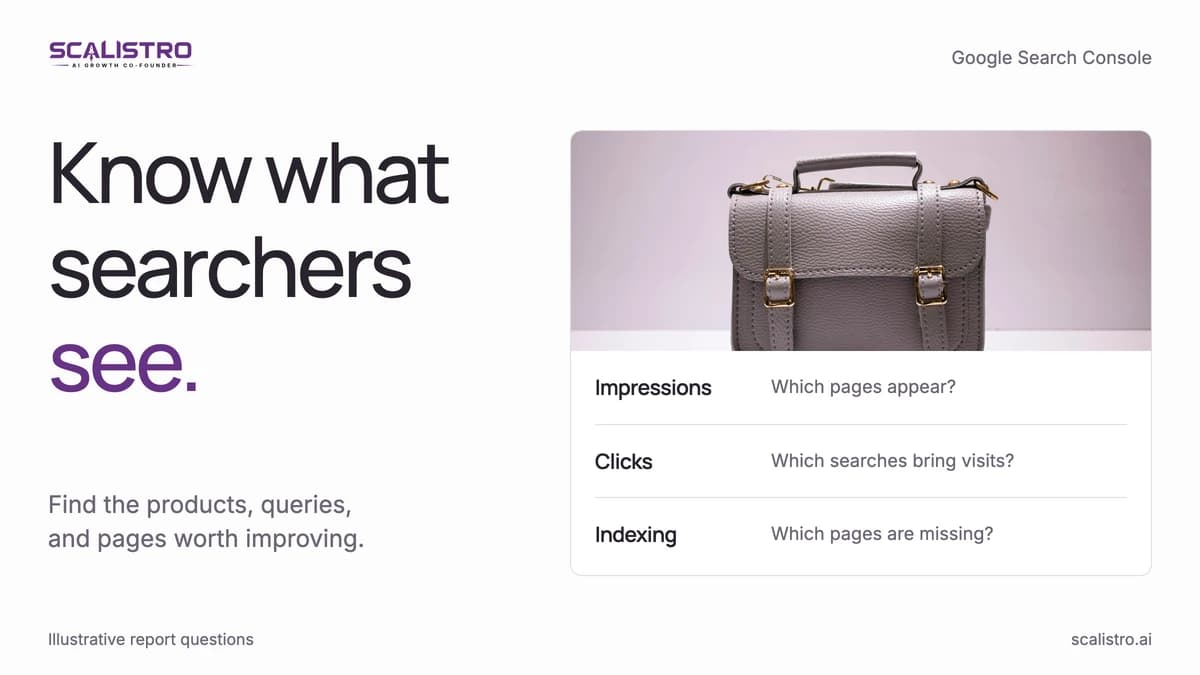
Measure SEO with the reports you already have: impressions, clicks, and conversions from organic search, by page and query. Google includes traffic from its AI features in the overall Search Console performance data rather than reporting it separately.
Swipe to explore. Tap to open full size.
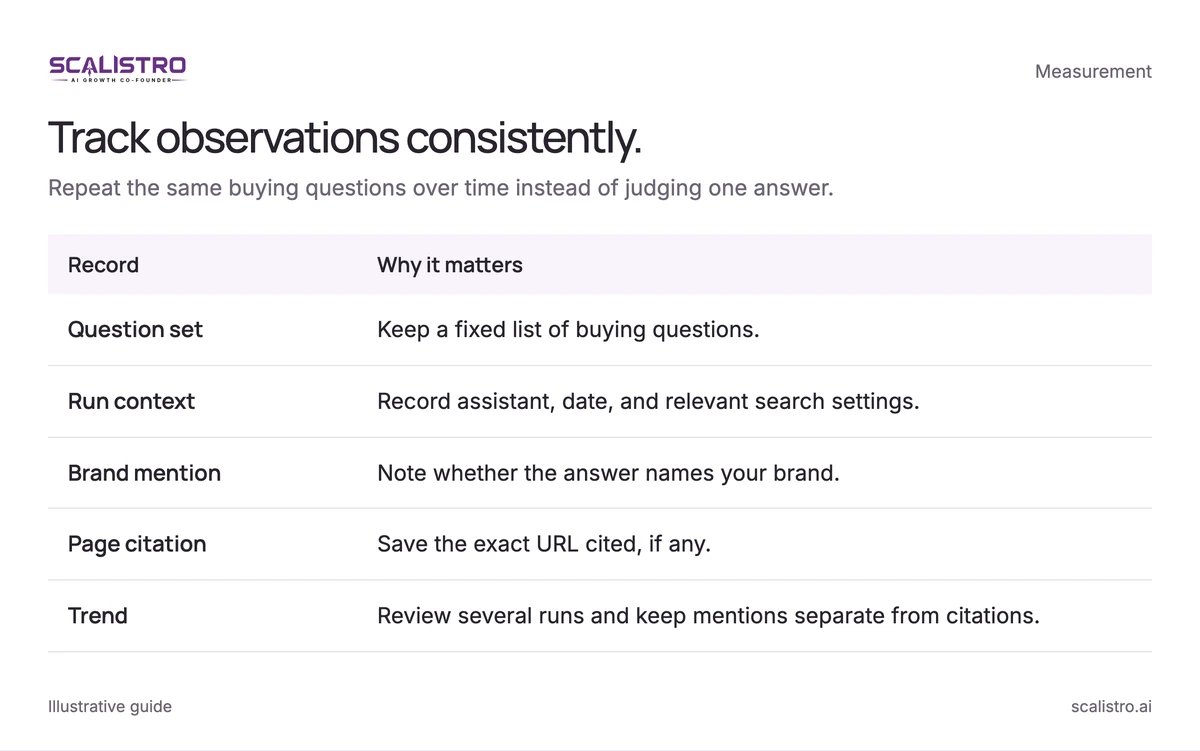
Image details: Track observations consistently.
| Record | Why it matters |
|---|---|
| Question set | Keep a fixed list of buying questions. |
| Run context | Record assistant, date, and relevant search settings. |
| Brand mention | Note whether the answer names your brand. |
| Page citation | Save the exact URL cited, if any. |
| Trend | Review several runs and keep mentions separate from citations. |
For AI assistants, keep a fixed list of 10 to 20 buying questions, such as "best beginner snowboard for a 70 kg rider", and check the main assistants on a schedule. Record whether your brand is mentioned and whether your pages are cited. Because answers vary, look for a trend over several checks rather than reacting to a single result.
Where to Start
Start with the pages closest to a purchase: your best-selling products, main collections, and the buying guides that lead to them. Fix access and indexing first, then add direct answers, then make the facts agree across pages.
Scalistro's search visibility audit runs SEO, AEO, and GEO checks on those pages and recommends what to change. You can act on the recommendations with your own team or bring in our experts to help.