TikTok Ads for D2C Brands: Setup and Creative Playbook
Start TikTok ads with native-feeling creative, accurate tracking, and a small testing plan. Scale only after checking conversion quality and margins.
On this page
TikTok Ads can be a useful acquisition channel for D2C brands that can make native short-form video consistently. Triple Whale's 2025 data puts the median TikTok CPM at $13.26, still below Meta's $14.19 median but rising 16 percent year over year (Triple Whale, 2025).
The setup is familiar, but the creative is different. Start with a broad campaign, make videos that fit the feed, measure purchases beyond the first click, and refresh winning concepts before they fatigue. This playbook covers each step.
TikTok vs Meta: Key Differences That Impact Strategy
Use these channel differences to set your budget and production plan. The numbers are benchmarks, so compare them with your own audience and category once campaigns are live.
| Factor | TikTok | Meta |
|---|---|---|
| Median CPM (Triple Whale, 2025) | $13.26 | $14.19 |
| Median CTR (Triple Whale) | 1.77% (2025) | 2.06% (Aug 2024 to Jul 2025) |
| Creative style | Native, UGC, raw | Polished + UGC both work |
| Sound | Central: over 93% of top-performing videos use audio | Plan for viewers with sound off in Feed |
| Creative lifespan | Short; plan frequent refreshes | Usually longer; still refresh regularly |
| Algorithm | Content-first (less reliant on targeting) | Targeting + content hybrid |
| Primary audience | Skews younger | Broader age range |
| Minimum daily budget | Above $20 per ad group, $50 per campaign | Low minimum; set by currency and optimization goal |
Creative is the biggest operational difference. TikTok users expect fast, creator-led videos. Polished Meta-style studio ads often feel out of place on TikTok, so adapt the concept to the platform before paying to distribute it.
TikTok Ad Formats for D2C
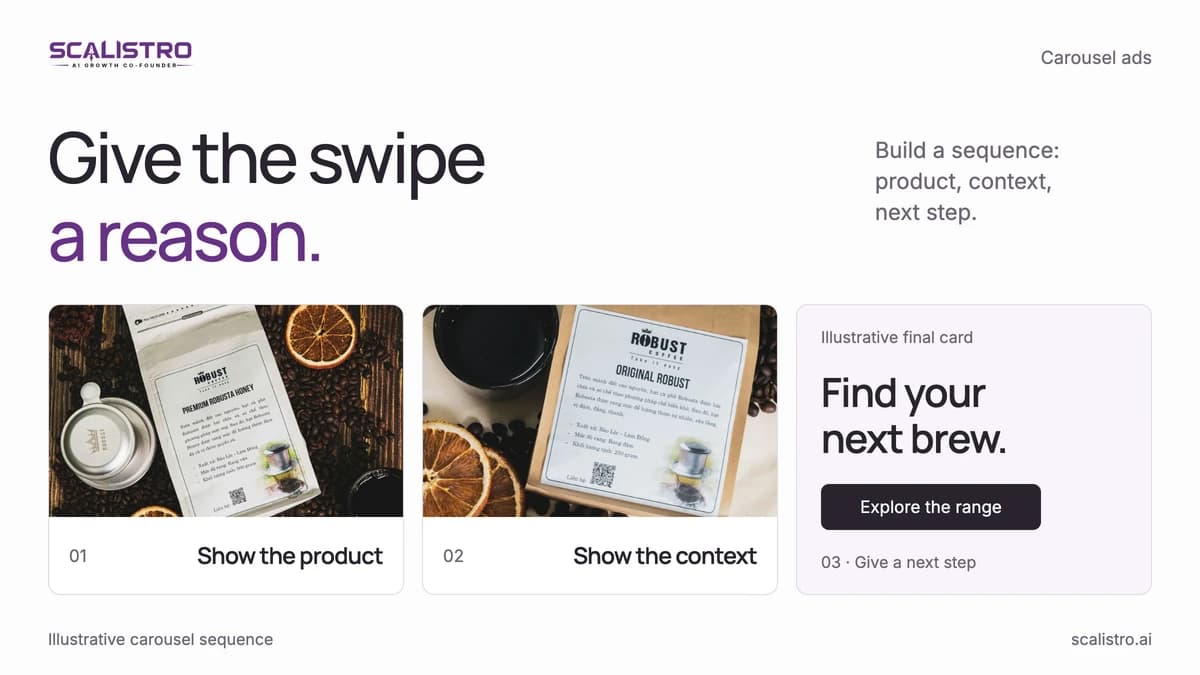
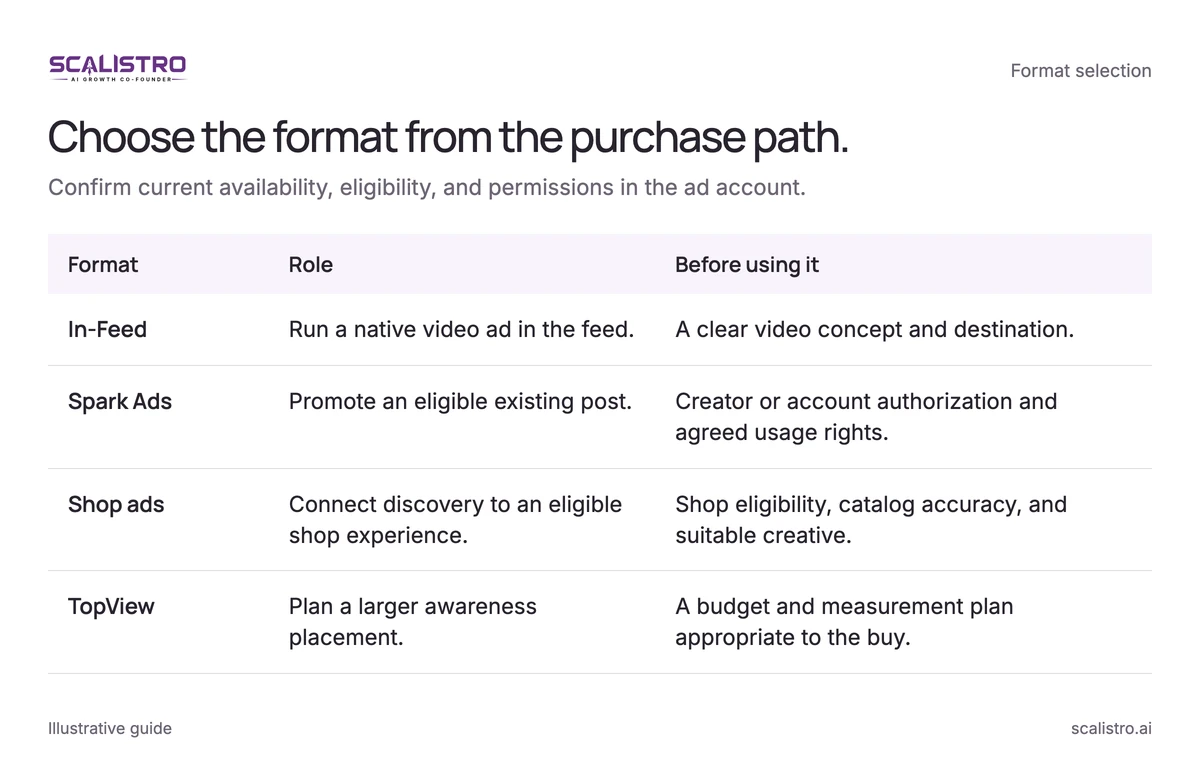
Pick the format based on the purchase path. In-Feed and Spark Ads suit most performance tests; Shop ads matter when checkout happens on TikTok; TopView is a large awareness buy.
Swipe to explore. Tap to open full size.
Image details: Choose the format from the purchase path.
| Format | Role | Before using it |
|---|---|---|
| In-Feed | Run a native video ad in the feed. | A clear video concept and destination. |
| Spark Ads | Promote an eligible existing post. | Creator or account authorization and agreed usage rights. |
| Shop ads | Connect discovery to an eligible shop experience. | Shop eligibility, catalog accuracy, and suitable creative. |
| TopView | Plan a larger awareness placement. | A budget and measurement plan appropriate to the buy. |
In-Feed Ads
In-Feed Ads appear in the For You feed. Use a 9:16 vertical video between 5 and 60 seconds, with 15 to 30 seconds as a starting point for direct response. Files can be up to 2 GB. This format gives most D2C teams a practical first test of reach, engagement, and purchase cost.
Spark Ads
Spark Ads promote an existing TikTok post from your account or an authorized creator. Their native presentation is worth testing against standard In-Feed Ads. Secure creator authorization and usage terms before building a campaign around a post.
TikTok Shop Ads
Product Shopping Ads and Live Shopping Ads can send eligible buyers to checkout inside TikTok Shop. Keeping checkout inside TikTok removes steps between discovery and purchase, so compare its CPA with campaigns that send shoppers to your site.
TopView and Branded Effects
TopView appears when users open the app. It is a high-cost awareness placement, priced by market, for brands with the budget to support broad reach. Start with measurable In-Feed or Spark campaigns if purchase efficiency is the immediate goal.
Campaign Structure That Works
TikTok uses campaigns, ad groups, and ads. Keep the first structure simple enough to tell whether audience, offer, or creative caused a result.
Starter Structure ($1.5K to $5K per Month)
- Campaign 1 - Prospecting (Conversions objective): Start with 1 broad ad group and 4 to 6 creatives. Add a second group when each can receive at least $20 per day. Once retargeting is funded, prospecting takes 70 to 80 percent of total spend.
- Campaign 2 - Retargeting (Conversions objective): Add 1 group for website visitors from the past 7 to 30 days and video viewers who watched 25 to 100 percent, once 20 to 30 percent of your budget is at least $20 per day. At the $50 daily starter floor, keep the budget on prospecting until that threshold and audience size are sufficient.
Start prospecting broadly. Narrow audience restrictions can limit TikTok's ability to find people who respond to the creative. Add restrictions when the product or results justify them, not only because you used them on Meta.
Scaled Structure ($5K to $20K per Month)
Increase complexity only when the starter campaigns have enough conversion data to support separate budgets and creative tests.
- Campaign 1 - Broad Prospecting: 2 to 3 ad groups, minimal targeting restrictions, 6 to 8 creatives each.
- Campaign 2 - Creator Spark Ads: 1 to 2 ad groups using boosted creator content.
- Campaign 3 - Retargeting: Segmented by funnel stage (video viewers, website visitors, add-to-cart abandoners).
- Campaign 4 - Testing: New creative concepts at $20 to $30 per day per creative.
Creative Best Practices: What Actually Works on TikTok
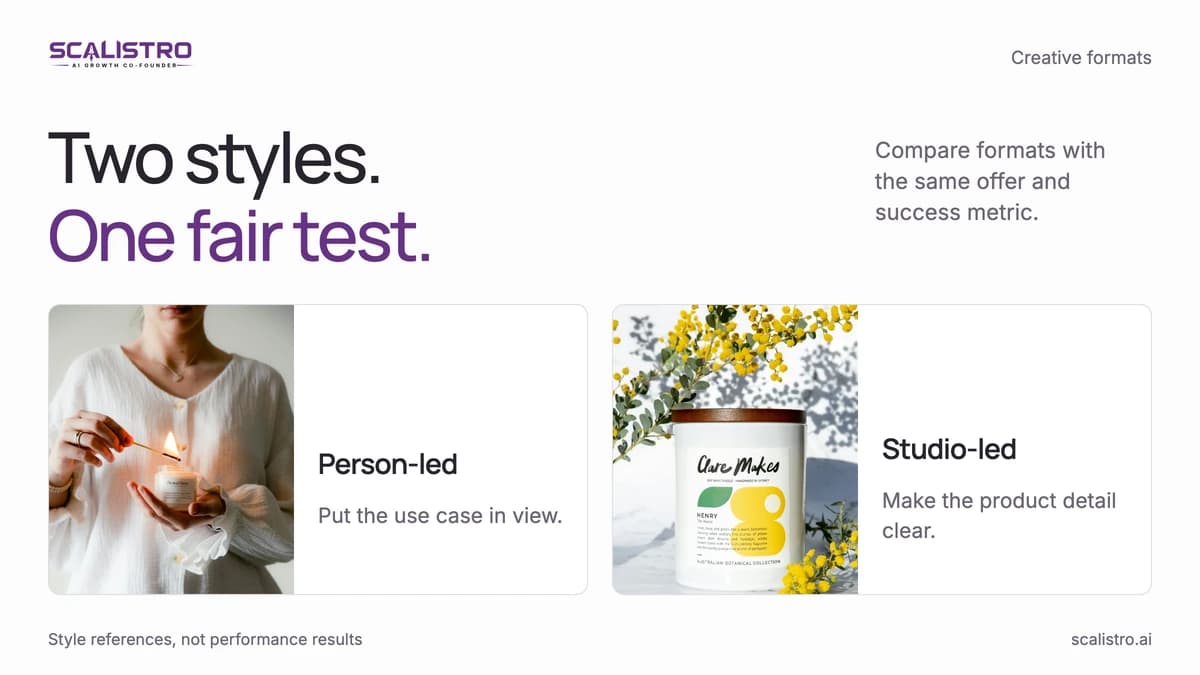
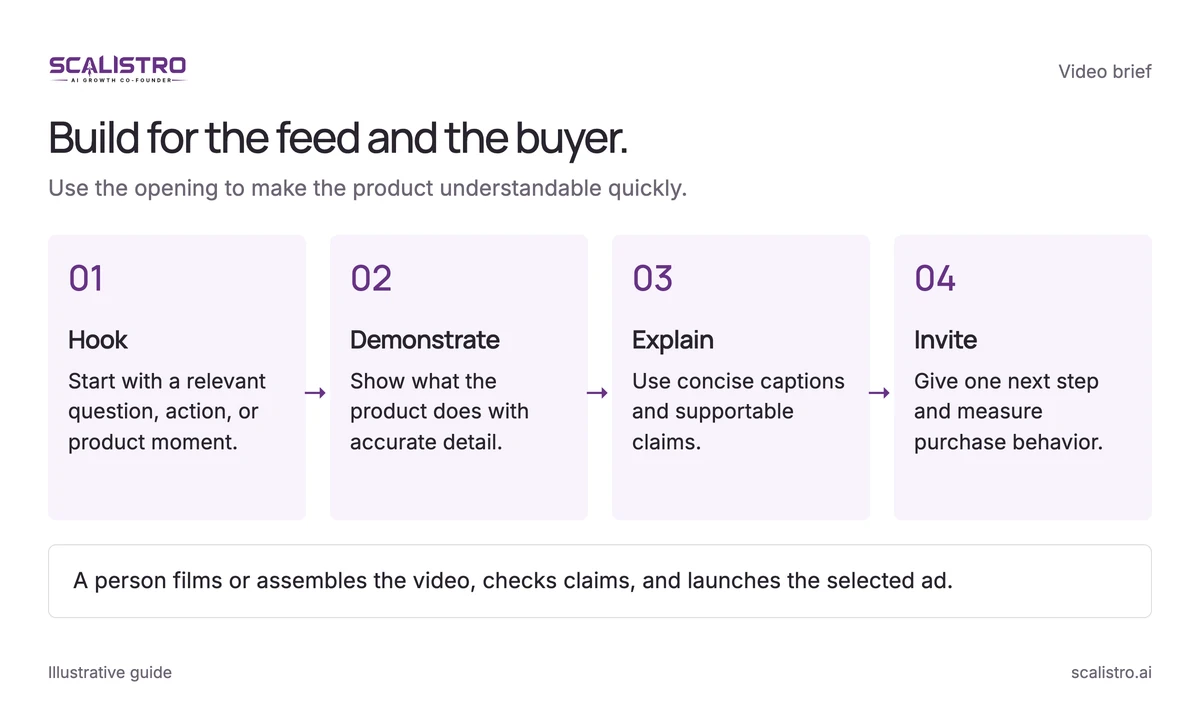
Make the product understandable in the first few seconds, then keep the video moving toward one clear action. Judge creative by purchase behavior as well as watch time. Listro can help prepare visual concepts for a TikTok brief; a person still films the video and checks every claim.
Swipe to explore. Tap to open full size.
Image details: Build for the feed and the buyer.
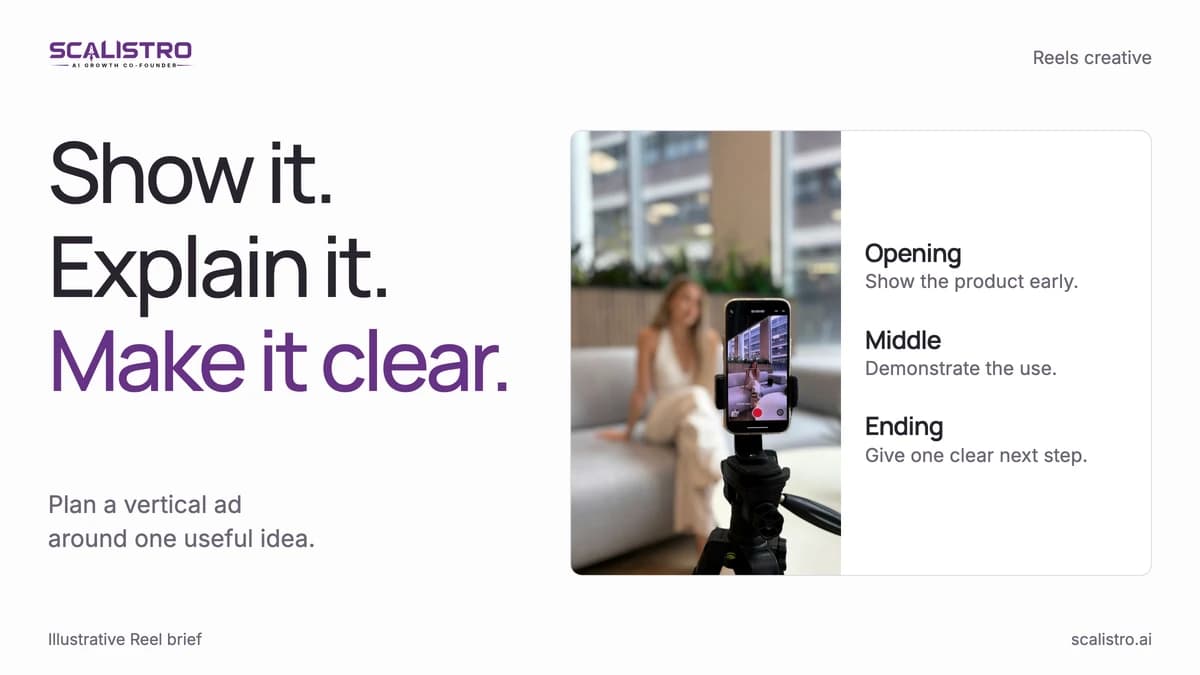
Build for the feed and the buyer. Use the opening to make the product understandable quickly. Hook - Start with a relevant question, action, or product moment.; Demonstrate - Show what the product does with accurate detail.; Explain - Use concise captions and supportable claims.; Invite - Give one next step and measure purchase behavior. A person films or assembles the video, checks claims, and launches the selected ad.
The 3-Second Rule
Viewers decide whether to keep watching in the first 1 to 3 seconds. Start with a visible product result, a close-up in motion, a direct-to-camera question, or a specific problem. A strong first-second visual hook keeps more people watching than a slow opening.
Native Over Polished
Creator-style content often outperforms studio-produced content on TikTok. A phone, clear natural light, and a real demonstration often work better than a polished set. Keep the sound, claims, and product details accurate even when the video feels casual.
Sound Strategy
TikTok reports that over 93 percent of top-performing videos use audio (TikTok Creative Center), so voiceover can explain a product while the video demonstrates it. Test original voiceover against music-only versions. Add captions as well so the message remains clear when sound is off.
The 5 TikTok Ad Scripts That Work for D2C
Use these as structures for original demonstrations, not scripts to copy word for word.
- "Wait for it" reveal: Build curiosity for 3 to 5 seconds, then reveal the product or result. Works for before-and-after products.
- "Things I wish I knew" or "Things TikTok made me buy": Frame your product as a discovery. Worth testing against direct product ads for cold audiences.
- Tutorial or how-to: Show the product in use with step-by-step instructions. Useful content tends to get saved, which signals quality.
- Problem to solution: 3 seconds on the problem, 5 to 7 seconds showing the product as the solution, 3 to 5 seconds of results or social proof.
- Trend adaptation: Take a trending TikTok format and adapt it to your product. Rides the algorithm's preference for trending content while delivering your message.
TikTok Ads Benchmarks for D2C Brands
Use the table to identify where your campaign needs work: expensive reach, weak hooks, low landing-page conversion, or insufficient purchase value.
| Metric | Median across ecommerce accounts (2025) |
|---|---|
| CPM | $13.26 |
| CTR | 1.77% |
| Conversion rate | 2.01% |
| CPA | $32.74 |
| ROAS | 2.21 |
Source: Triple Whale TikTok Ads benchmarks. Compare against your own category and history before setting targets.
Compare TikTok and Meta on the same measure for your brand. In Triple Whale's medians, TikTok ROAS (2.21 in 2025) was slightly above Meta's (1.88 for August 2025 to July 2026), and results vary widely by category. Also watch branded search and direct traffic after launching TikTok Ads, since TikTok's own reports may not capture those sales.
Common TikTok Ads Mistakes
Most early underperformance comes from creative that does not fit the feed, campaigns too narrow to learn, or judging results before enough purchase data arrives.
- Reusing Meta edits without adaptation: Rework the opening, pacing, framing, and sound for a TikTok feed.
- Over-targeting: Start broad enough to learn which viewers respond, then narrow only when results support it.
- Ignoring TikTok Shop: Test an on-platform purchase path when your product category and operations allow it.
- Judging too early: Learning commonly takes 3 to 5 days and roughly 50 conversions. Review at day 7 rather than making major decisions on day 2.
- Skipping creators: Budget $500 to $2,000 per month for creator partnerships, even when media spend is still small.
If you also advertise on Meta, compare the creative approach with the Instagram Reels ads guide.