UGC Ads vs Professional Ads for D2C: What to Test
Neither UGC nor polished ads win everywhere. Compare both using the same audience, offer, and success metric, then choose by funnel stage and brand fit.
On this page
- Introduction
- Defining UGC and Professional Ads Clearly
- What Each Format Tends to Do Well
- Key Insight 1: UGC Often Suits Cold Prospecting
- Key Insight 2: Professional Ads Often Suit Retargeting and Higher-Priced Products
- Key Insight 3: A Mix Is the Safer Starting Point
- The 5 Factors That Determine Which Format Wins for Your Brand
- How to Source Great UGC for Your Brand
- How to Produce Professional Ads Cost-Effectively
- The Winning Strategy: Build Your Creative Mix
- Frequently Asked Questions
UGC-style ads often win the first click from cold audiences, while polished ads can help buyers evaluate quality later in the journey. Analysis of more than 1,200 D2C campaigns across beauty, wellness, food, apparel, and home shows that neither format wins every placement.
The useful decision is which format to use for a specific audience, product, and stage. Compare both with the same offer and success metric before setting a permanent creative mix.
Defining UGC and Professional Ads Clearly
These are production styles, not guarantees of who made the content. A paid creator can make a UGC-style ad, and a brand can make a professional ad featuring a real customer.
UGC Ads (User-Generated Content Style)
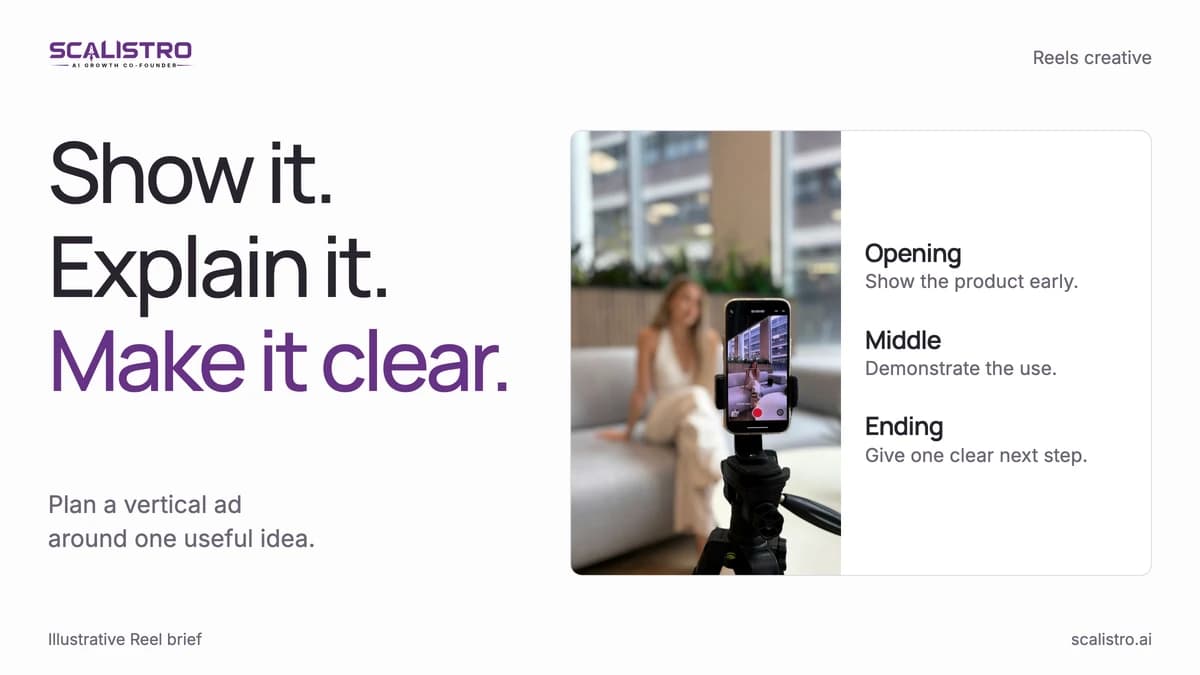
UGC-style ads use a personal voice and native social format. Common examples include:
- Talking head videos: A person speaking directly to camera about a product, filmed on a smartphone.
- Unboxing and first impression videos: Showing the experience of receiving and trying a product for the first time.
- Testimonial videos: Customers sharing their experience, results, or transformation.
- Day-in-my-life integrations: Product naturally woven into a creator's daily routine content.
- Screen recordings and reaction videos: Scrolling through reviews, reacting to ingredients, showing before-and-after photos.
Many UGC-style ads are commissioned from creators rather than submitted by customers. Budget $150 to $500 per video, then confirm usage rights and disclosure requirements before running it as paid media.
Professional Ads
Professional ads use planned production and a consistent brand treatment. They can still include real customers and useful demonstrations:
- Studio product photography: Clean, well-lit product images with professional styling and post-production.
- Brand campaign videos: Scripted, directed video content with professional lighting, sound, and editing.
- Motion graphics and animated ads: Designed visuals with text animation, transitions, and polished brand elements.
- Lifestyle photoshoots: Models, styled locations, professional photographer and creative director.
- High-production UGC (hybrid): Creator-style content that is professionally lit, scripted, and edited to maintain a polished aesthetic while feeling personal.
Production cost depends on the format: $2,000 to $8,000 for 20 to 30 studio images, $3,000 to $15,000 for a branded video, and $500 to $3,000 for motion graphics as rough planning estimates; quotes vary widely by market and scope.
What Each Format Tends to Do Well
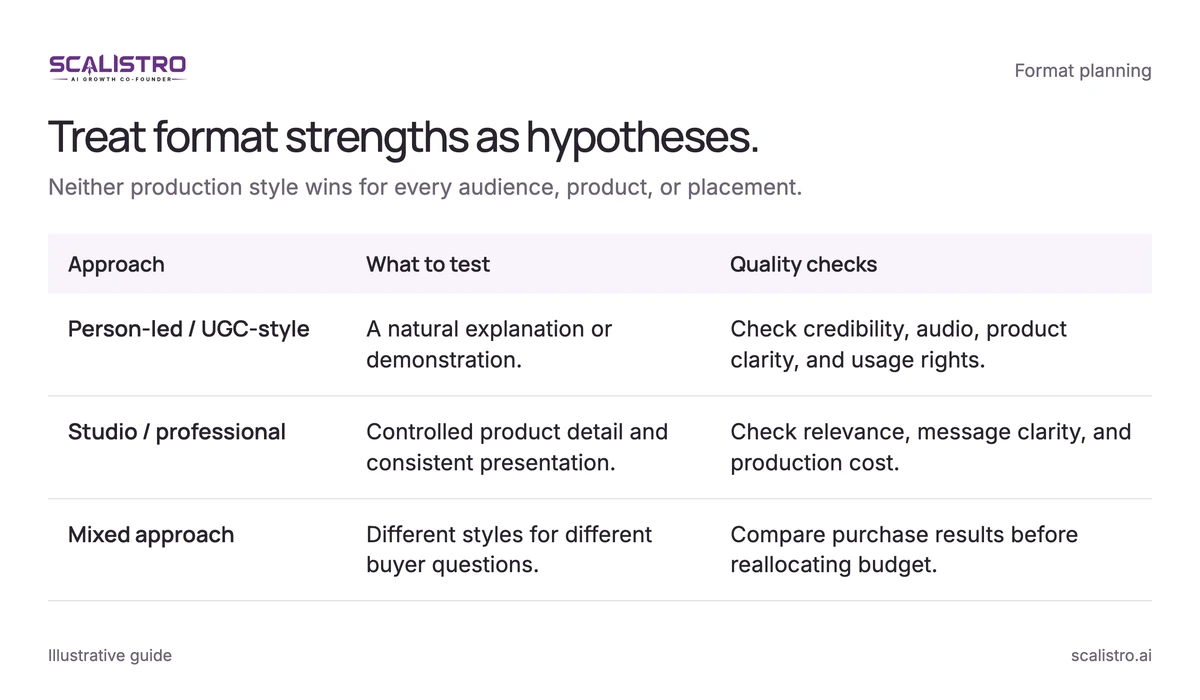
We could not find a published, method-backed study comparing UGC and professional ads across D2C brands, so treat the points below as hypotheses to test in your own account.
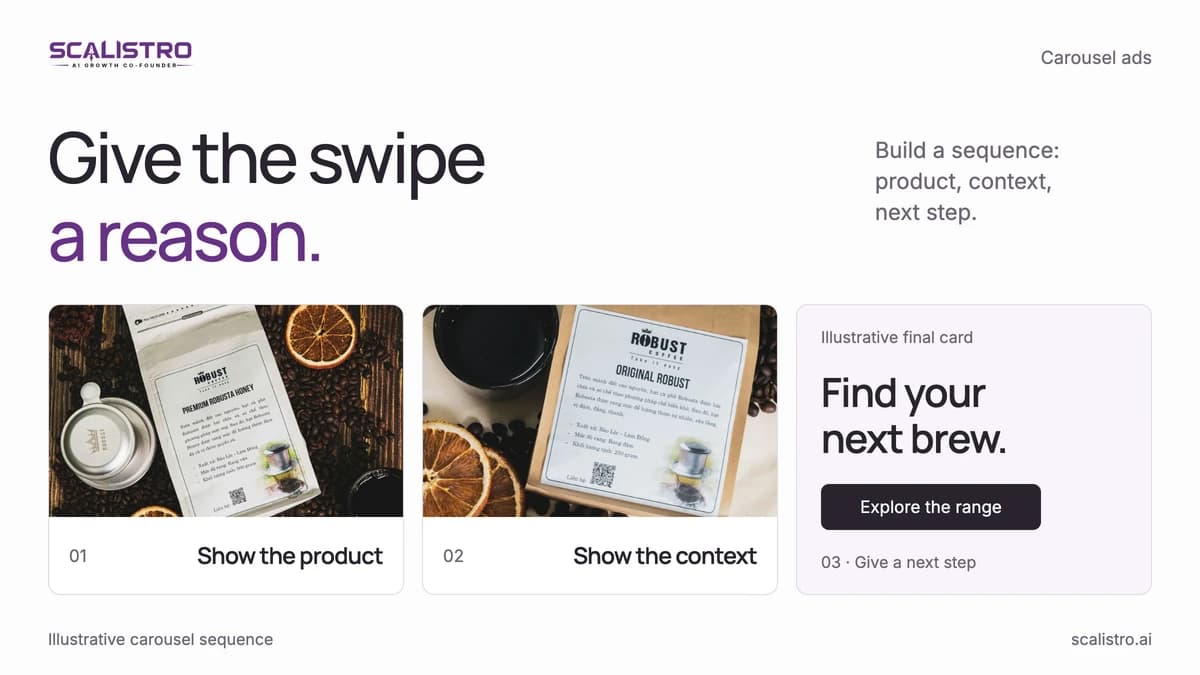
Swipe to explore. Tap to open full size.
Image details: Treat format strengths as hypotheses.
| Approach | What to test | Quality checks |
|---|---|---|
| Person-led / UGC-style | A natural explanation or demonstration. | Check credibility, audio, product clarity, and usage rights. |
| Studio / professional | Controlled product detail and consistent presentation. | Check relevance, message clarity, and production cost. |
| Mixed approach | Different styles for different buyer questions. | Compare purchase results before reallocating budget. |
Key Insight 1: UGC Often Suits Cold Prospecting
A native-feeling, person-led opening can earn attention from people who do not yet know the brand, which often helps cold prospecting.
Keep the purchase metric in view. A strong hook matters only if the video quickly shows the product and gives the viewer a reason to act.
Key Insight 2: Professional Ads Often Suit Retargeting and Higher-Priced Products
Once someone has visited the store, clearer product detail and consistent presentation can address the remaining trust or quality questions. Polished creative can also suit higher-priced products where buyers want to inspect detail.
Judge each format by the customer it brings in, not only the first-order cost. For example, a customer who costs $49 to acquire and buys 2.4 times a year at $72 brings $172.80 in yearly revenue, while one who costs $38 and buys 1.8 times at $58 brings $104.40. Run that calculation with your own numbers and include contribution margin before choosing a winner.
Key Insight 3: A Mix Is the Safer Starting Point
Most brands do not need to pick one format. Start with a mixed test, then move budget toward the format that works by funnel stage.
A practical starting allocation is:
- Cold prospecting: 60 to 70 percent UGC, 30 to 40 percent professional. Lead with UGC to capture attention and drive clicks at low cost. Include some professional creative for the segment of cold audience that responds better to polished content.
- Warm retargeting (site visitors, engagers): 50-50 mix. Both formats perform well here. The variety itself helps - showing the same person UGC on Tuesday and a professional ad on Thursday reduces fatigue and presents your brand from multiple angles.
- Hot retargeting (cart abandoners, product viewers): 30 to 40 percent UGC, 60 to 70 percent professional. At this stage, the prospect needs reassurance and brand credibility to complete the purchase. Professional imagery delivers that confidence.
The 5 Factors That Determine Which Format Wins for Your Brand
Use these five factors to set an initial hypothesis. Your controlled test should have the final say.
Factor 1: Price Point
Lower-priced products often suit UGC across stages, while higher-priced products often need more polished presentation, including in cold prospecting. Test against your product's consideration cycle and margin.
Factor 2: Product Category
Personal testimony can work well for skincare, wellness, food, and fitness, where a demonstration or lived experience helps explain the product. Fashion, home decor, jewelry, and luxury often benefit from controlled styling and detail. Review claims carefully in regulated categories.
Factor 3: Brand Maturity
Newer brands often use UGC to introduce an unfamiliar product through a person. Established brands can make more use of their visual identity in professional ads. In between, a balanced test is a useful starting point.
Factor 4: Creative Volume Capacity
When capacity is 5 to 10 ads a month, a creator can often deliver 3 to 5 usable videos in a day for $300 to $1,000. Comparable professional production may cost $5,000 to $15,000 and take 2 to 3 weeks. For a 15 to 25 variation weekly testing target, use production methods the team can actually review and sustain.
Listro can help prepare static ad variations and video concepts while creators provide personal demonstrations. Compare approved assets under the same offer and audience.
Factor 5: Target Audience Demographics
Younger audiences are often assumed to prefer creator-style content and older audiences polished ads, but test this rather than assume it. Use age as a way to choose a test audience, not to assume every buyer in an age group wants the same ad.
How to Source Great UGC for Your Brand
Good UGC still needs clear audio, a credible speaker, a visible product, and usage rights. Source creators who can explain the product naturally rather than only copying a popular format.
Finding UGC Creators
Compare creator cost with the right to edit and run the video as an ad. Reach and follower count matter less than fit and believable delivery.
- UGC platforms: Platforms like Billo, Insense, and JoinBrands connect brands with UGC creators. Check each platform's current pricing; rates vary by creator experience and usage rights.
- Your own customers: The most authentic UGC comes from real buyers. Send product to 20 to 30 customers with a simple brief and a small incentive ($25 gift card). Expect only some of them to send usable content.
- TikTok and Instagram outreach: Search relevant hashtags and reach out to creators who already create content in your category. These creators understand the aesthetic and tone that resonates with your target audience.
Writing a UGC Brief That Produces Winners
The brief shapes most of the result. Give a creator room to speak naturally while specifying the product facts, desired hook, and technical requirements:
- Hook options (first 2 seconds): Give the creator 3 specific hook options. Example: "Start with: I have been using this for 3 weeks and my skin has completely changed" or "Start by holding the product up to camera and saying: Okay, I need to talk about this."
- Key talking points (3 maximum): What specific benefits or features must be mentioned? Do not give more than 3 - overloading the brief makes the video feel scripted.
- Tone and energy direction: Specify whether you want excited and enthusiastic, calm and informative, or skeptical-turned-believer.
- CTA: What action should viewers take? Include a specific verbal CTA: "Link in bio," "Use my code," or "Check out [brand name]."
- Technical requirements: Vertical video (9:16), well-lit (natural light preferred), clear audio (no background music or noise), 15 to 45 seconds duration.
How to Produce Professional Ads Cost-Effectively
Professional-looking static ads can come from an agency, freelancer, or an in-house team using AI tools. Compare cost with review time and the number of useful concepts produced. The ranges below are rough planning estimates, not measured benchmarks:
| Production Method | Cost per Ad | Time to Produce | Volume per Month |
|---|---|---|---|
| Agency (full-service) | $500 - $2,000 | 5 - 10 days | 10 - 20 |
| Freelance designer | $100 - $400 | 2 - 5 days | 15 - 30 |
| AI creative tools | $5 - $25 | 10 - 30 minutes | 100 - 300 |
| In-house with AI assist | $15 - $50 | 30 min - 2 hours | 50 - 150 |
An in-house marketer can use AI for a first layout, then check product truth, hierarchy, and placement fit. That makes it easier to test polished and creator-style formats at similar volume without assuming they have the same production cost.
The Winning Strategy: Build Your Creative Mix
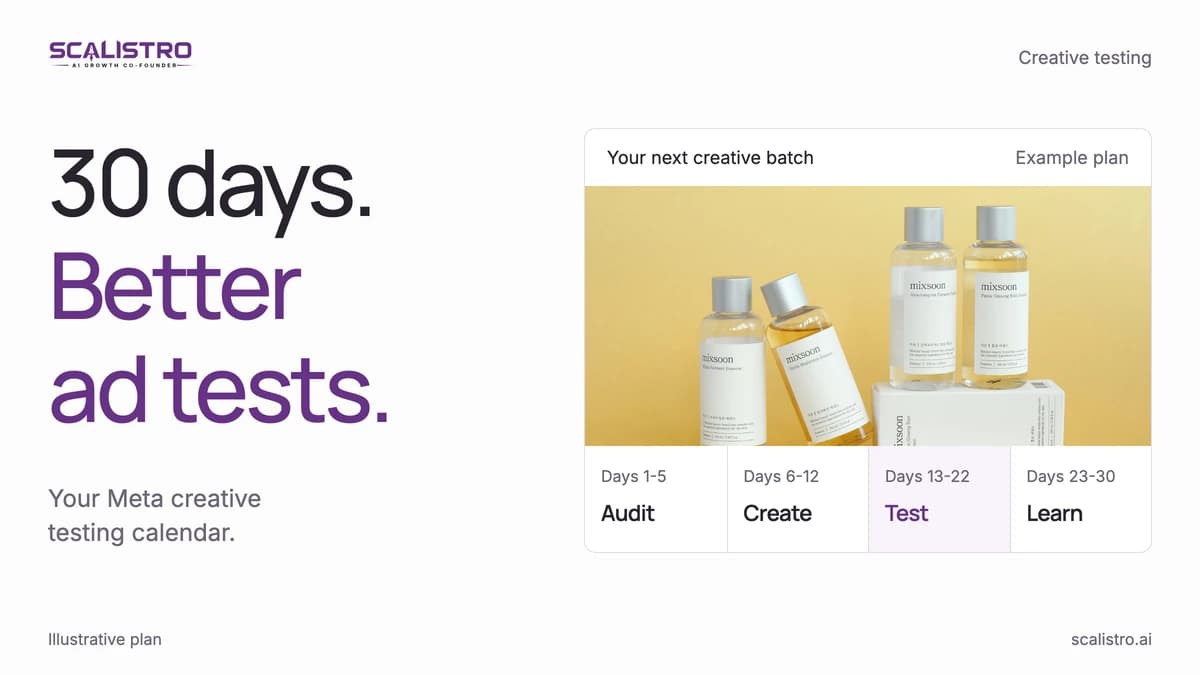
Choose an initial mix based on budget and maturity, then shift it from actual CPA, contribution margin, and repeat-purchase results:
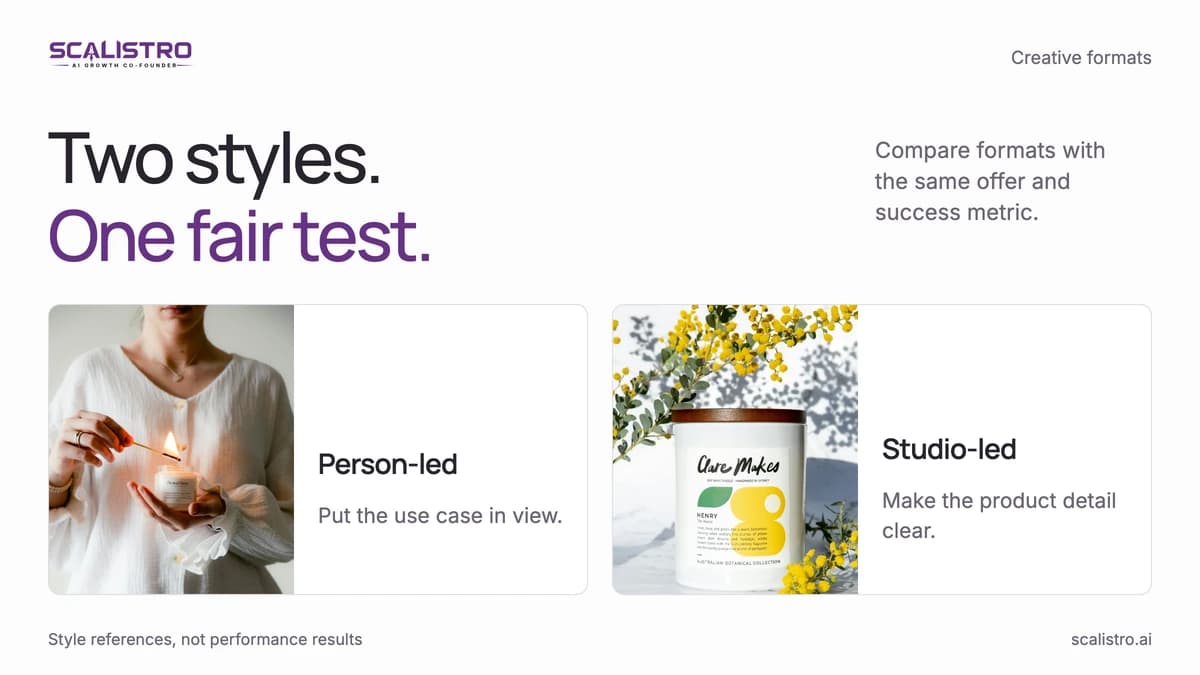
Swipe to explore. Tap to open full size.
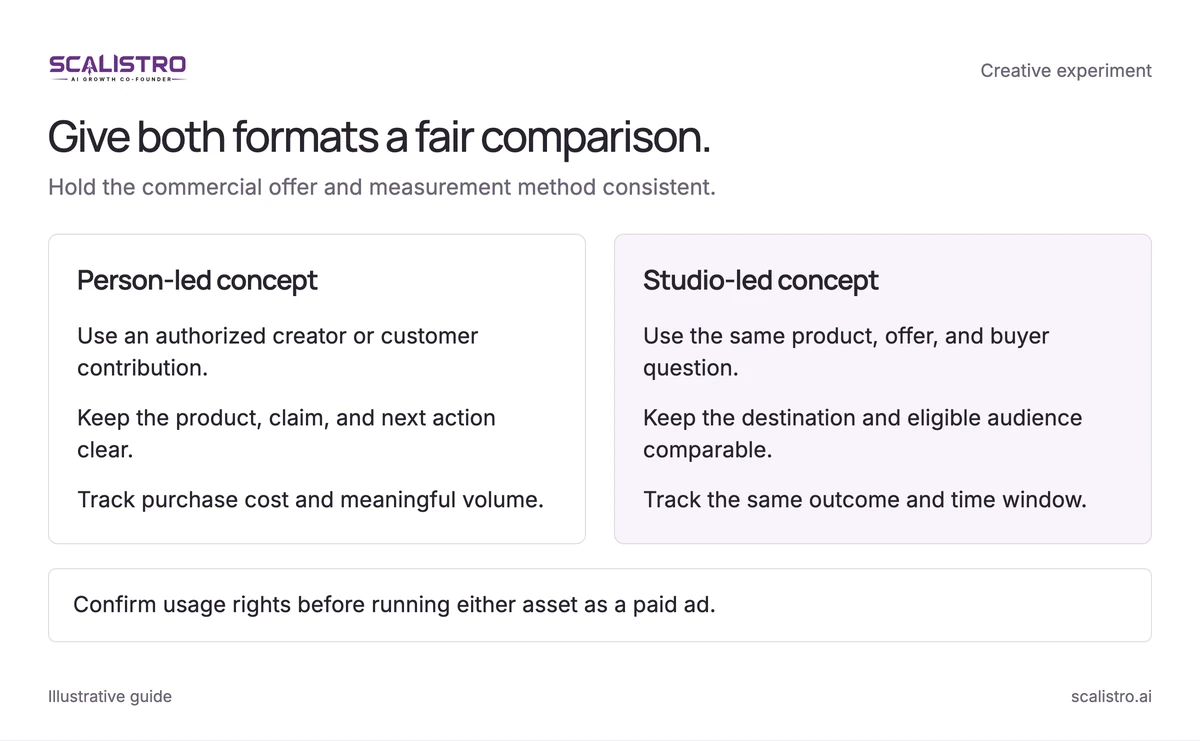
Image details: Give both formats a fair comparison.
Give both formats a fair comparison. Hold the commercial offer and measurement method consistent. Person-led concept - Use an authorized creator or customer contribution. - Keep the product, claim, and next action clear. - Track purchase cost and meaningful volume.; Studio-led concept - Use the same product, offer, and buyer question. - Keep the destination and eligible audience comparable. - Track the same outcome and time window. Confirm usage rights before running either asset as a paid ad.
- Pre-launch to $50K monthly revenue: Start with 80 percent UGC, 20 percent professional. Prioritize authentic testimonials and founder-led content. Use AI tools for the professional 20 percent to keep costs low.
- $50K to $200K monthly revenue: Move to 60 percent UGC, 40 percent professional. Invest in a UGC creator roster (5 to 10 regular creators) and start developing a polished brand visual identity for retargeting and brand campaigns.
- $200K+ monthly revenue: Balance at 50-50 or adjust based on your specific performance data. At this stage, you have enough data to know exactly which format drives the best results for each audience segment. Let the data decide rather than following general benchmarks.
If creators will make your UGC, use the influencer vetting guide to choose and brief them.