Why D2C Ad Creative Needs AI Speed and Human Taste
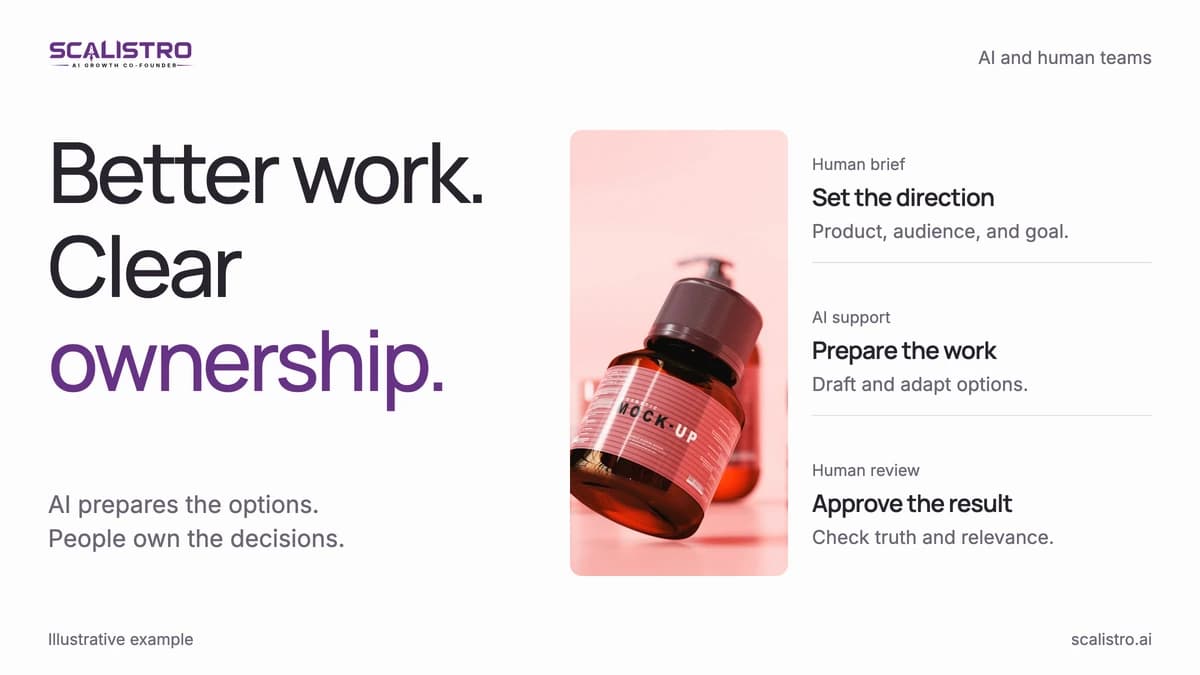
AI can produce more creative options quickly, but people must choose the idea, check product truth, and judge whether the work fits the brand.
On this page
- Introduction
- Why Creative Quality Is the Biggest Lever for D2C Ad Performance
- Where AI Excels in Ad Creative Production
- Where AI Falls Short and Humans Are Essential
- The Workflow That Produces the Best Results
- Why Most AI Ad Tools Produce Generic Creatives and How Scalistro Is Different
- What to Measure in an AI Plus Human Creative Workflow
- How to Start: Practical Steps for D2C Founders
- Frequently Asked Questions
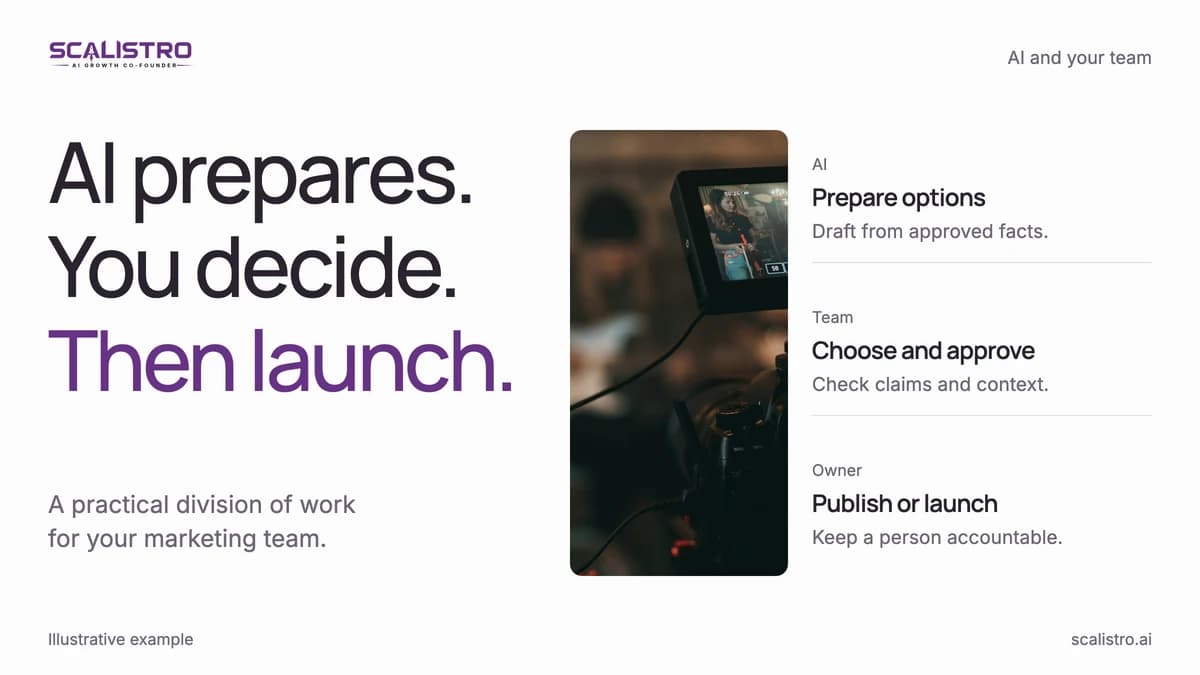
The strongest D2C ad workflow uses AI to produce and adapt ideas quickly, then uses people to choose the angle, check product truth, and approve spend. That combination gives a team more concepts to test without publishing every generated asset.
This guide shows where each side contributes, how to run a weekly creative cycle, and which results to measure.
Why Creative Quality Is the Biggest Lever for D2C Ad Performance
A 2017 Nielsen study of 500 advertising campaigns attributed 47 percent of their contribution to sales to the creative (Nielsen via Recast). That makes the message, visual, and opening seconds central to acquisition, even when targeting and budget are set well.
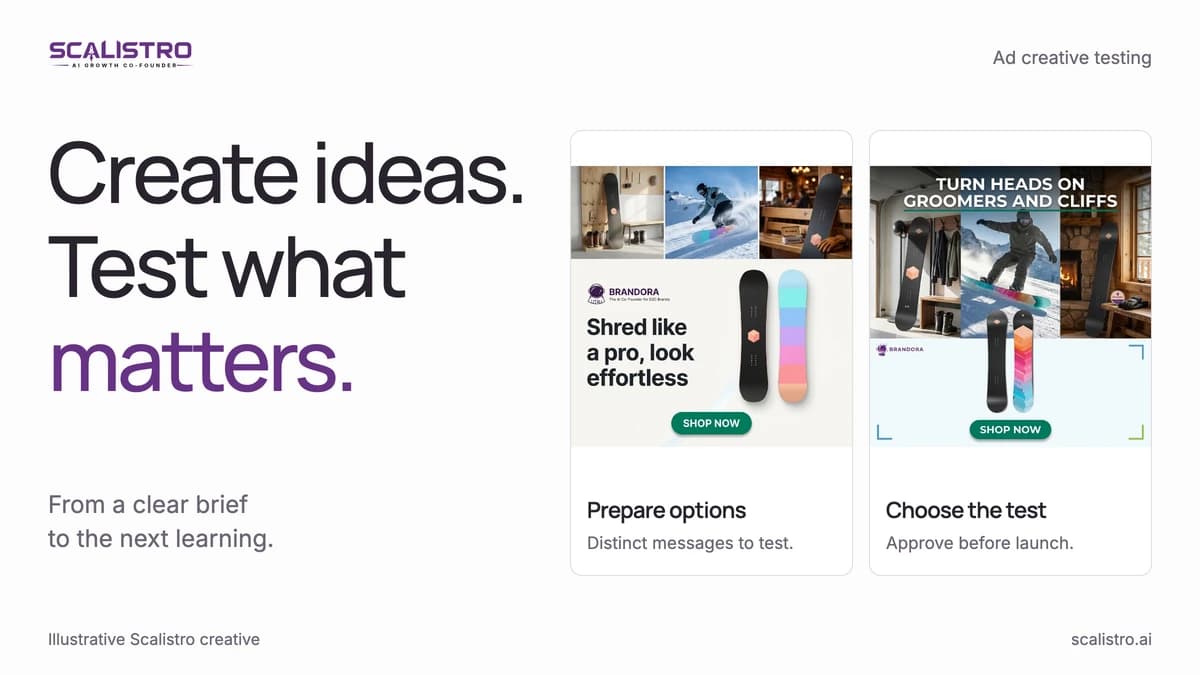
Give the ad system distinct concepts worth testing, then evaluate the purchase results. Volume makes the comparison possible, but quality and relevance determine whether the extra impressions produce customers.
Where AI Excels in Ad Creative Production
Listro can help produce assets from an approved brief and examine connected campaign data. Use AI for work where speed creates more useful test options.
Variation Speed
A designer might produce 3 to 5 variations per day; AI can produce 20 to 50 in the same period. For a plan with 3 to 5 concepts and 4 to 6 variations each, that is 12 to 30 assets to review. The advantage is a faster first set of options, followed by human selection.
Format Adaptation
Adapt an approved idea for Instagram Feed, Stories, Reels, Facebook Feed, Google Display, and YouTube Shorts. Each placement needs its own crop, pacing, and text treatment. Check the output at the actual placement size instead of assuming one layout works everywhere.
Copy Iteration
Give AI the verified product facts and a winning angle, then ask for different headlines, primary text, and calls to action. Select versions that test a meaningful message difference. Reject invented urgency, unsupported proof, or generic lines that could describe any competitor.
Data-Driven Creative Decisions
Use connected ad account results to identify which concepts, audiences, and messages performed best. Listro can help summarize that history; the team should check the attribution window and sample size before writing the next brief.
Where AI Falls Short and Humans Are Essential
AI-only production often repeats yesterday's winners until they stop working. Brands that fully automate creative hit a plateau within 4 to 8 weeks. Human review helps catch the reasons before more budget goes into tired ideas.
Brand Taste and Aesthetic Judgment
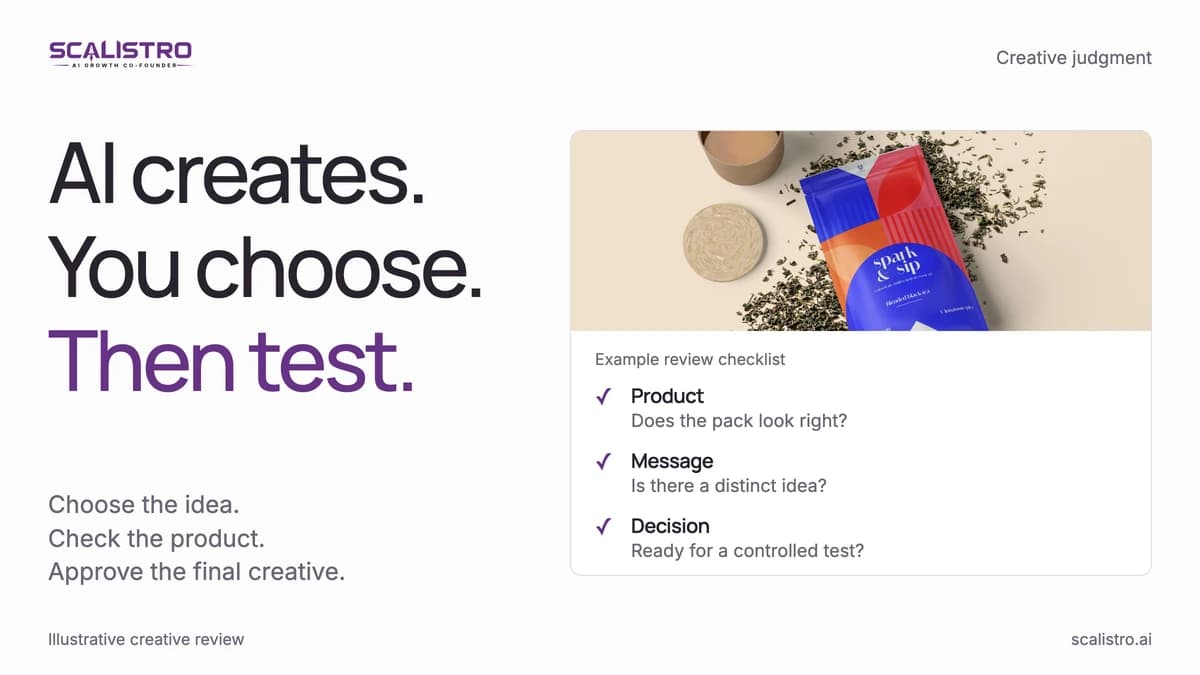
AI can follow a style guide, but a person decides when a visual truly fits the brand and when the guide needs to change. Review the whole ad, including product accuracy, typography, context, and the feeling it creates.
Emotional Storytelling
Many high-converting D2C ads communicate a small story in 3 to 6 seconds: a frustration, a product moment, and a result. AI can suggest a structure. A person who knows the customer chooses the detail and language that make the scene believable.
Cultural Context and Timing
Check current platform behavior and audience language before approving a trend-led ad. A phrase, sound, or visual reference may have changed meaning since the model's source material. A marketer close to the audience can catch that mismatch.
Strategic Direction
Set the next question yourself: a new benefit, a new audience objection, or a different visual context. If AI keeps varying only the last winner, the account may improve locally while the brand runs out of fresh concepts.
The Workflow That Produces the Best Results
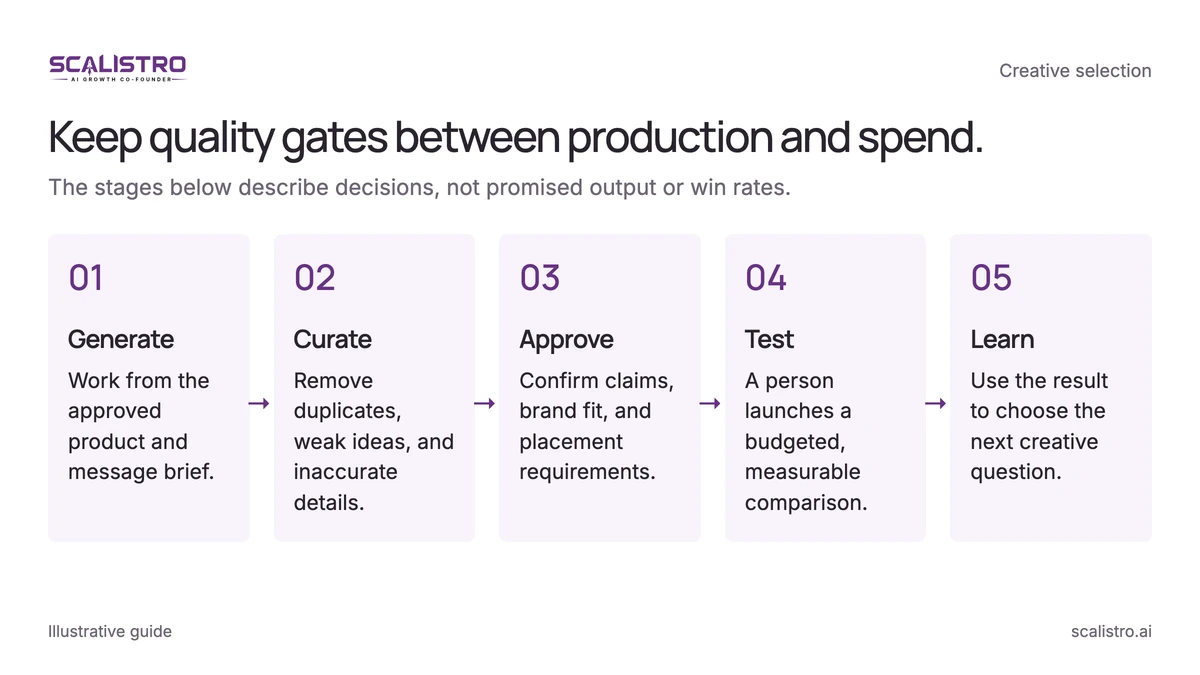
Run a short cycle with a clear brief, approval gate, test budget, and decision rule. The table shows who owns each stage.
Swipe to explore. Tap to open full size.
Image details: Keep quality gates between production and spend.
Keep quality gates between production and spend. The stages below describe decisions, not promised output or win rates. Generate - Work from the approved product and message brief.; Curate - Remove duplicates, weak ideas, and inaccurate details.; Approve - Confirm claims, brand fit, and placement requirements.; Test - A person launches a budgeted, measurable comparison.; Learn - Use the result to choose the next creative question.
| Stage | Who Leads | What Happens |
|---|---|---|
| Creative Strategy | Human | Define angles, positioning, and testing priorities based on brand goals and market context |
| Creative Generation | AI (Listro) | Generate 20 to 40 variations across copy, visuals, and formats from the human-defined brief |
| Quality Curation | Human | Review, select, and refine the top 10 to 15 creatives that meet brand standards |
| Launch and Testing | Human, informed by Listro | Prepare test ideas from Meta and Google data; a person sets budgets and launches |
| Performance Analysis | AI (Listro) | Analyze results across creatives, audiences, and funnel stages to identify winners |
| Strategic Iteration | Human | Decide what to scale, what to kill, and what new angles to explore in the next cycle |
Repeat the loop weekly or every two weeks. Feed the observed results into the next brief, and record which concepts were rejected or approved. Faster production matters only if the team learns from the tests.
Why Most AI Ad Tools Produce Generic Creatives and How Scalistro Is Different
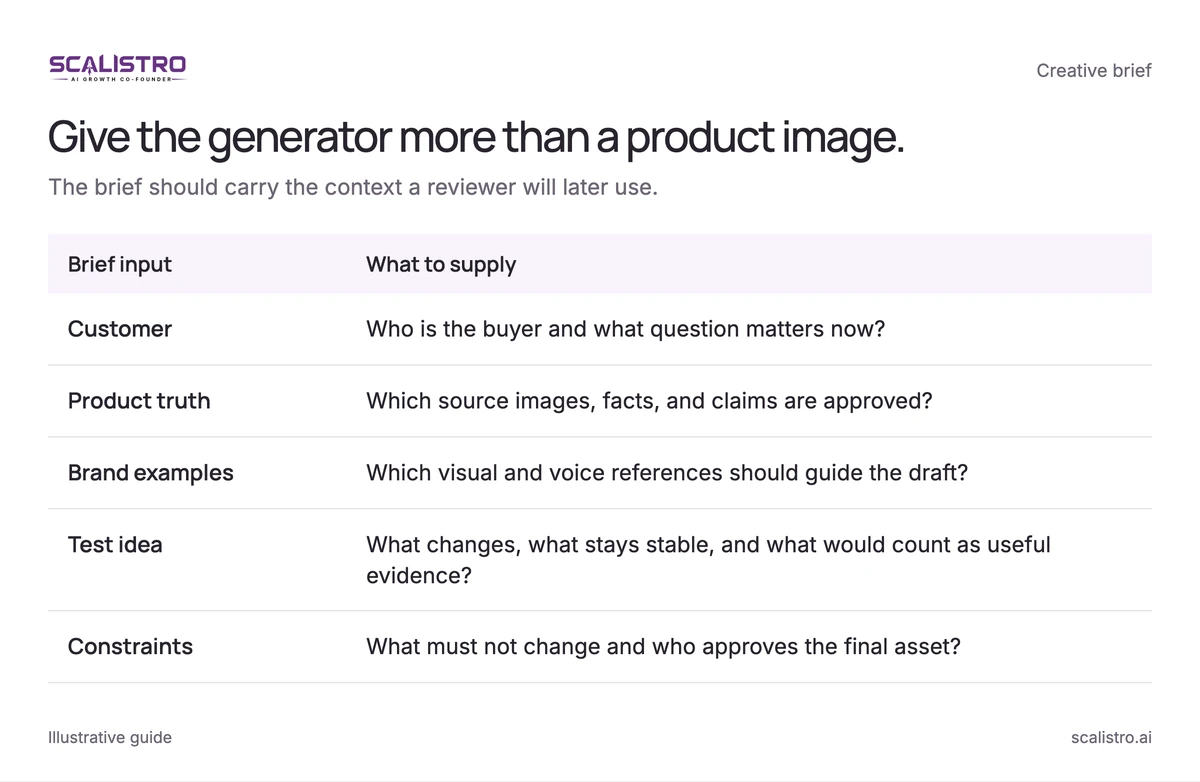
An image and a short prompt rarely contain enough context for a useful ad. The brief should also include the customer, product facts, approved claims, brand examples, and the result the team wants to improve.
Swipe to explore. Tap to open full size.
Image details: Give the generator more than a product image.
| Brief input | What to supply |
|---|---|
| Customer | Who is the buyer and what question matters now? |
| Product truth | Which source images, facts, and claims are approved? |
| Brand examples | Which visual and voice references should guide the draft? |
| Test idea | What changes, what stays stable, and what would count as useful evidence? |
| Constraints | What must not change and who approves the final asset? |
Listro can help the team review connected Meta and Google results. Use that evidence, the product catalog, and the brand direction to brief the next creative batch, then review every selected asset before it becomes an ad. Compare the resulting tests with your current workflow to judge the value.
What to Measure in an AI Plus Human Creative Workflow
Record these before you change your workflow, then compare them after 8 or more weeks:
- Production time: hours from brief to approved creative
- Cost per creative: production spend divided by approved assets
- Testing velocity: distinct variations tested per week
- Creative lifespan: weeks before a winning ad's results start to fall
- ROAS and cost per purchase: for the campaigns that use the new creative
Compare like with like: the same products, offers, and attribution window. The point is to learn whether the workflow helps your account, not to match someone else's figures.
How to Start: Practical Steps for D2C Founders
Start with the current production bottleneck, then add AI where it increases test quality or reduces repetitive work.
Step 1: Audit Your Current Creative Process
Measure weekly variation count, time from concept to live ad, and the age of active winners. Fewer than 10 tests a week, more than 3 days to launch, or an irregular refresh schedule are useful signs to investigate.
Step 2: Define Your Brand Creative Standards
Document visual examples, tone, message hierarchy, prohibited claims, and any color or competitor rules. A short, specific brief gives the generator and reviewer the same standard.
Step 3: Connect Your Data
Use connected Shopify, Meta, and Google Ads data to identify which product, audience, and message need a new test. That context makes the brief more specific than a prompt based only on a product photo.
Step 4: Run Your First AI Plus Human Creative Cycle
Choose one strategic question, generate distinct variations, approve the strongest, and launch a controlled test. Record the result before repeating the cycle. After 2 to 3 cycles, compare production speed and ad performance with the original baseline.
Turn that division of work into tests with the AI ad creative workflow guide.